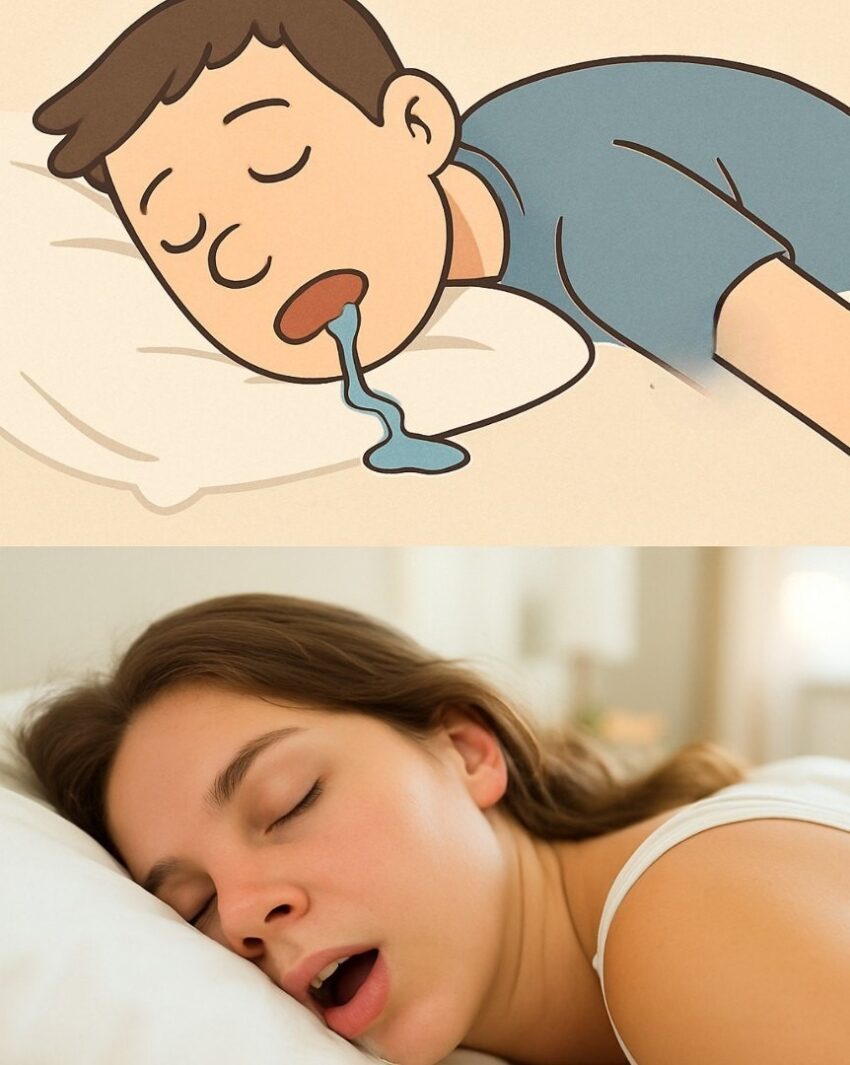
Drooling during sleep is very common and usually harmless. It happens when saliva escapes the mouth because of sleep position or reduced swallowing during deep sleep. However, in some cases, frequent drooling can be linked to certain health conditions.
Here’s a clear, balanced breakdown:
😴 Common (Normal) Causes
Most of the time, drooling is not a medical problem:
- Sleeping on your side or stomach (gravity causes saliva to escape)
- Deep sleep phases where swallowing slows down
- Nasal congestion → breathing through the mouth
- Open-mouth sleeping habits
⚠️ Possible Health-Related Causes
1. Nasal congestion or allergies
Blocked nasal passages force mouth breathing, increasing drooling.
2. Sleep apnea
A condition where breathing repeatedly stops during sleep, often causing:
- Mouth breathing
- Snoring
- Drooling
3. Acid reflux (GERD)
Stomach acid can irritate the throat, increasing saliva production.
4. Neurological conditions (rare)
Conditions that affect muscle control or swallowing, such as:
- Parkinson’s disease
- Cerebral palsy
These may reduce the ability to swallow saliva properly.
5. Medication side effects
Some medications can increase saliva production or relax throat muscles.
6. Dental or oral issues
- Poor bite alignment
- Mouth inflammation
- Poor oral posture during sleep
🚨 When to be concerned
You should consider a doctor visit if drooling is:
- New and persistent
- Combined with choking or breathing issues
- Accompanied by excessive daytime fatigue or snoring
- Associated with neurological symptoms
💡 Simple ways to reduce drooling
- Sleep on your back if possible
- Treat nasal congestion (steam, saline sprays)
- Manage allergies
- Maintain good oral hygiene
- Address possible sleep apnea if symptoms fit
🧠 Key Insight
Occasional drooling is completely normal—it often just means you were in a deep sleep or sleeping on your side. It only becomes meaningful if it’s frequent and paired with other symptoms.
If you want, I can give you a quick checklist to tell the difference between normal drooling and sleep apnea warning signs.
