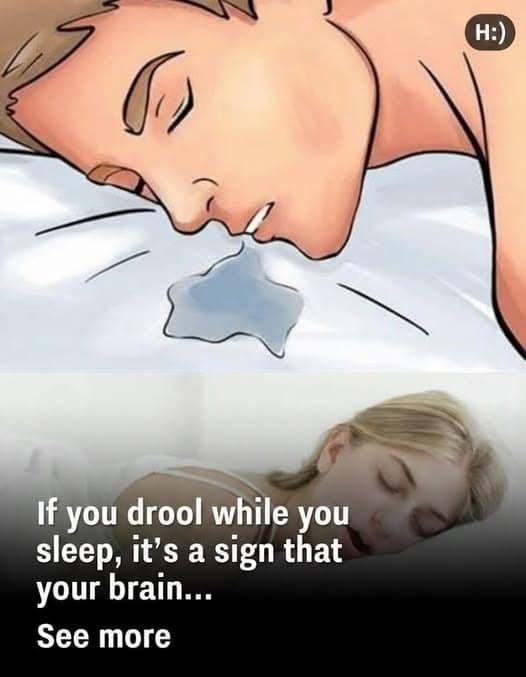
That statement is incomplete and misleading—drooling during sleep is not a sign of something specific about your brain in most cases.
What drooling during sleep usually means
1. Deep sleep (sometimes)
When you’re in a relaxed or deeper sleep stage:
- Facial muscles loosen
- Swallowing reflex slows down
This can let saliva escape, especially if you’re lying on your side.
2. Sleeping position
- Side or stomach sleeping → more likely to drool
- Mouth slightly open → saliva leaks out
3. Nasal congestion
If your nose is blocked (cold, allergies), you breathe through your mouth → more drooling.
4. Saliva production
Some people naturally produce more saliva, especially at night.
When it might be related to the brain or nerves
In rare cases, excessive drooling can be linked to neurological conditions like:
- Parkinson’s disease
- Stroke
But these come with other serious symptoms, not just drooling alone.
Bottom line
Drooling while sleeping is usually normal and harmless.
It doesn’t mean your brain is “special,” “damaged,” or anything dramatic—it’s mostly about:
- Sleep position
- Muscle relaxation
- Breathing patterns
If you’re drooling a lot and have other symptoms (like difficulty swallowing or waking up choking), then it’s worth looking into. Otherwise, it’s nothing to worry about.
