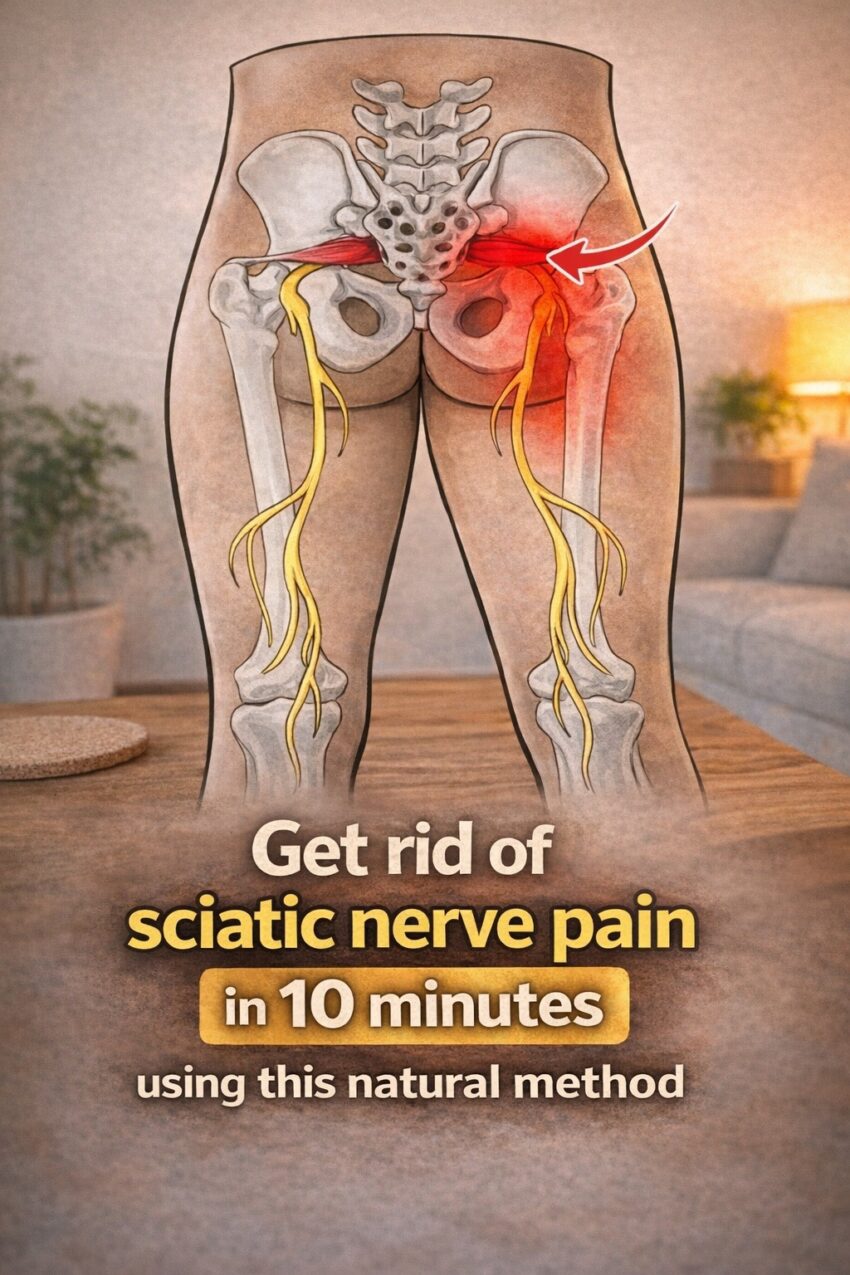
Here’s a practical, safe guide for quick relief from sciatica discomfort using simple at-home stretches and tips:
What is Sciatica?
Sciatica is caused by pressure or irritation on the sciatic nerve, usually in the lower back. Symptoms include:
- Sharp, shooting pain down the leg
- Numbness or tingling in the foot or leg
- Stiffness in the lower back
1. Piriformis Stretch
- How to do it:
- Lie on your back.
- Bend your knees, feet flat.
- Place your right ankle over your left knee.
- Gently pull your left thigh toward your chest.
- Hold: 20–30 seconds, repeat on both sides.
- Benefit: Relieves tension in the glute and hip area, reducing pressure on the sciatic nerve.
2. Seated Spinal Twist
- How to do it:
- Sit on the floor with legs extended.
- Bend your right knee and place the foot on the outside of your left thigh.
- Twist your torso to the right, placing your left elbow outside your right knee.
- Hold: 20–30 seconds, then switch sides.
- Benefit: Stretches lower back muscles, easing nerve compression.
3. Cat-Cow Stretch
- How to do it:
- Start on hands and knees.
- Arch your back up (Cat), then dip it down (Cow) slowly.
- Repeat: 10–15 times.
- Benefit: Increases spinal flexibility and relieves tension in the lower back.
4. Hamstring Stretch
- How to do it:
- Sit on the floor, legs extended.
- Lean forward gently, reaching toward your toes.
- Hold: 20–30 seconds.
- Benefit: Tight hamstrings can worsen sciatic pain; stretching them reduces pull on the lower back.
Additional At-Home Tips
- Heat or Ice Therapy: Alternate a heating pad and ice pack on the lower back for 15–20 minutes.
- Gentle Walking: Light movement improves circulation and eases stiffness.
- Posture Check: Avoid slouching; keep feet flat on the floor when sitting.
- Supportive Sleep: Use a pillow under the knees if lying on your back, or between knees if side sleeping.
⚠️ When to See a Doctor
- Pain that worsens or persists beyond a few weeks
- Numbness, weakness, or loss of bladder/bowel control
- Pain after an injury
💡 Bottom line: These stretches and tips can provide quick relief, improve flexibility, and reduce nerve pressure, but consistency is key. Gentle daily practice often prevents flare-ups.
If you want, I can make a 1-minute illustrated routine showing these stretches step by step, perfect for home use. Do you want me to do that?
