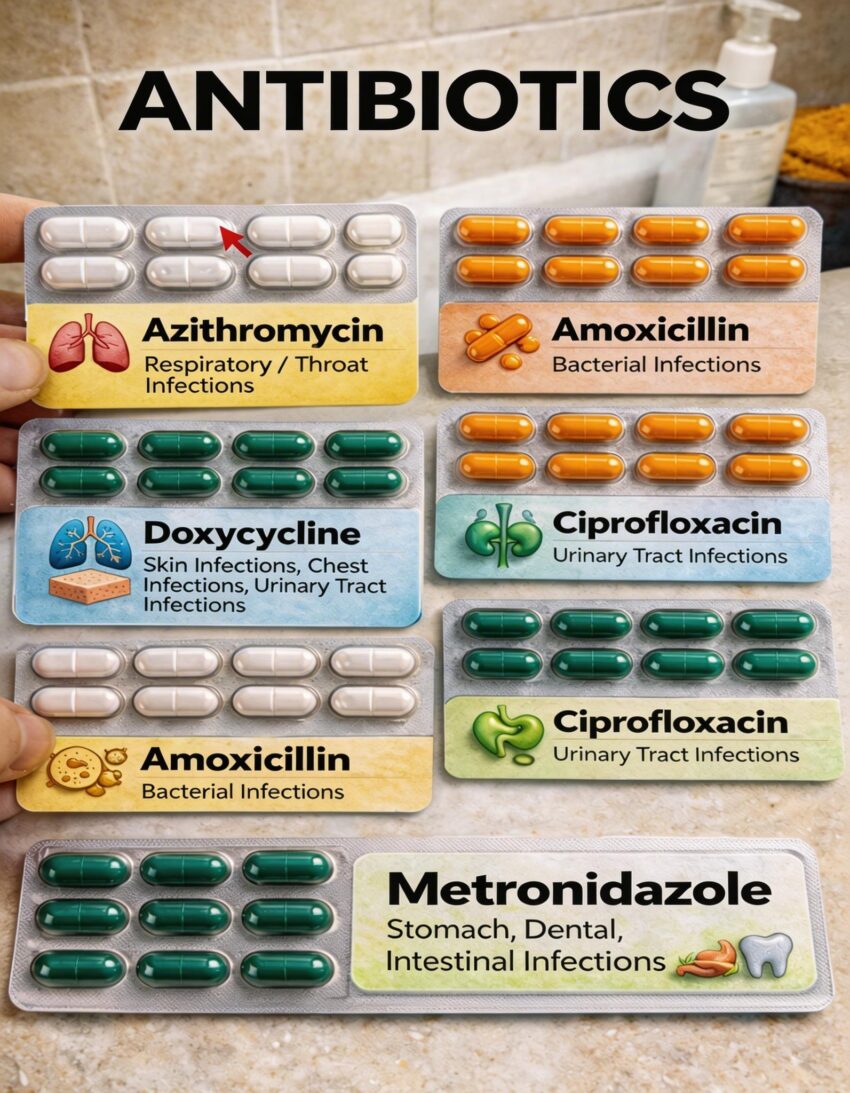
Here are five of the most commonly prescribed antibiotics and why they matter for your health. These are widely used because they’re effective, generally well-tolerated, and target common bacterial infections.
1. Amoxicillin
What it treats:
- Ear infections
- Sinus infections
- Throat infections (like strep)
- Some chest infections
Why it matters:
It’s often the first-line treatment because it’s effective against many bacteria and usually has mild side effects.
2. Azithromycin
What it treats:
- Respiratory infections
- Skin infections
- Some sexually transmitted infections
Why it matters:
Known for its short treatment course (often 3–5 days), making it convenient and improving patient compliance.
3. Ciprofloxacin
What it treats:
- Urinary tract infections (UTIs)
- Gastrointestinal infections
- Certain serious bacterial infections
Why it matters:
It’s a broad-spectrum antibiotic, useful when infections are more complicated—but it’s used carefully due to potential side effects.
4. Doxycycline
What it treats:
- Acne
- Respiratory infections
- Tick-borne diseases (like Lyme disease)
Why it matters:
Very versatile and often used when patients are allergic to penicillin.
5. Cephalexin
What it treats:
- Skin infections
- Bone infections
- UTIs
Why it matters:
A good alternative to penicillin with strong effectiveness against skin-related bacteria.
⚠️ Why antibiotics matter (and must be used carefully)
- They only work against bacteria, not viruses (like colds or flu)
- Misuse can lead to Antibiotic resistance, making infections harder to treat
- Always complete the full course—even if you feel better early
🧠 Bottom line:
Antibiotics are powerful tools that save lives, but they must be used responsibly and only when prescribed. The right antibiotic depends on the infection, your health history, and local resistance patterns.
If you want, I can also break down which antibiotic is typically used for specific symptoms (like sore throat vs UTI).
