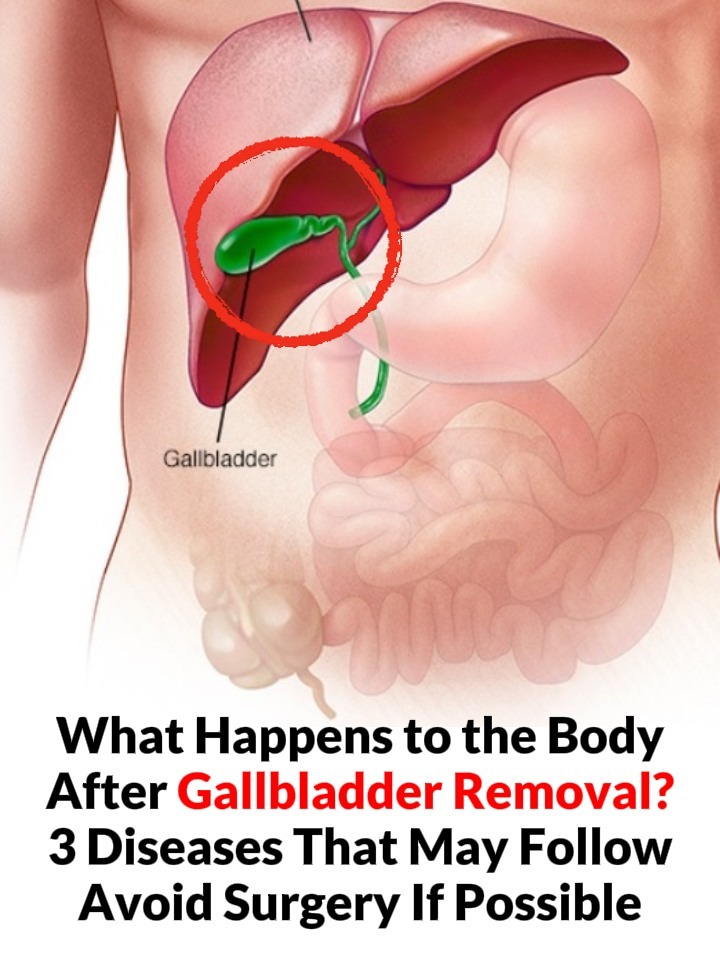
That headline mixes some truth with a lot of fear. Let’s go through it clearly and realistically 👇
🧠 What happens after gallbladder removal
The surgery is called Cholecystectomy.
👉 After removal:
- Your liver still makes bile
- But bile flows directly into the intestine instead of being stored
🔄 Common (usually mild) changes
🍽️ 1. Fat digestion changes
- Harder to handle large fatty meals
- May cause bloating or discomfort
🚽 2. Loose stools or diarrhea
- Happens in some people
- Often temporary
😣 3. Food sensitivity
- Greasy or spicy foods may trigger symptoms
👉 Most people adjust within weeks to months
⚠️ “3 diseases that may follow” — what’s actually true
1. 🧪 Postcholecystectomy syndrome
- Symptoms like pain, gas, diarrhea
- Not a single disease—more a group of symptoms
- Affects a minority
2. 🔥 Bile reflux
- Bile irritates stomach lining
- Can cause burning or nausea
- Less common than acid reflux
3. ⚖️ Possible metabolic risks
Some studies suggest a link with:
- Type 2 diabetes
👉 But this is influenced more by:
- Diet
- Weight
- Lifestyle
❗ The “avoid surgery” claim — misleading
🚫 You might delay surgery if:
- You have silent gallstones (no symptoms)
- Symptoms are mild and manageable
✅ You SHOULD consider surgery if you have:
- Repeated severe pain attacks
- Cholecystitis
- Infection or blockage
👉 In these cases, surgery can prevent serious complications
🥗 How to stay healthy after surgery
- Eat smaller, low-fat meals
- Gradually reintroduce foods
- Increase fiber slowly
- Stay active
✔️ Bottom line
- Gallbladder removal is common and generally safe
- Most people live normal lives afterward
- Some digestive changes can happen—but are manageable
- The “3 diseases” claim is overstated and meant to scare
If you want, I can help you figure out whether gallbladder surgery is necessary in your specific situation—that’s the most important decision.
