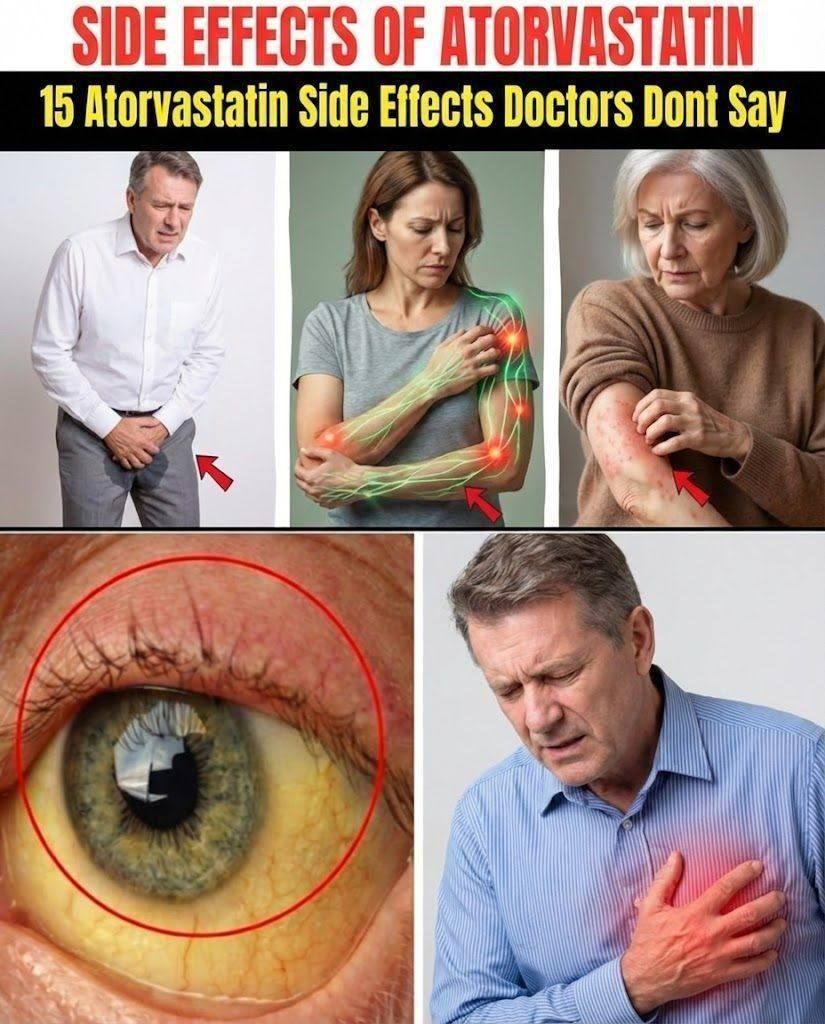
That headline is overblown. Atorvastatin is widely used and generally safe—but like all medications, it can have side effects. The idea that doctors “never mention” them is exaggerated.
Here’s a clear, realistic breakdown of possible side effects—including the less talked-about ones:
🧠 Common & expected side effects
1. Muscle aches
- Mild soreness or stiffness
👉 Most common complaint
2. Joint pain
Sometimes confused with normal aging
3. Digestive issues
- Nausea
- Diarrhea
- Indigestion
🟡 Less obvious (but possible)
4. Fatigue
Feeling unusually tired
5. Sleep disturbances
- Trouble sleeping
- Vivid dreams (rare)
6. Mild memory issues
Some people report forgetfulness
👉 Evidence is mixed and usually reversible
7. Increased blood sugar
May slightly raise risk of Type 2 Diabetes in some individuals
8. Liver enzyme changes
Detected through blood tests—not symptoms
9. Headaches
10. Skin reactions
- Rash
- Itching
🚨 Rare but serious (important)
11. Severe muscle damage
Called Rhabdomyolysis
- Severe pain
- Dark urine
👉 Needs urgent medical attention
12. Liver problems
- Yellowing of skin/eyes
- Dark urine
❌ What the headline gets wrong
- “15 hidden side effects” ❌ → Most are already known and monitored
- “Doctors don’t mention them” ❌ → They usually discuss common risks
- “High risk for everyone” ❌ → Most people tolerate it well
✔️ What you should actually do
- Don’t stop the medication suddenly
- Report:
- Muscle pain
- Unusual fatigue
- Any new symptoms
- Get routine blood tests if prescribed
⚖️ Why it’s prescribed
Atorvastatin helps lower cholesterol and reduce risk of:
- Heart attack
- Stroke
👉 Benefits often outweigh risks
✔️ Bottom line
There are side effects, but most are mild, manageable, and uncommon. The viral headline exaggerates risk—what matters is monitoring and communication, not fear.
If you’re taking it and noticing something specific, tell me—I can help you figure out if it’s related or not.
