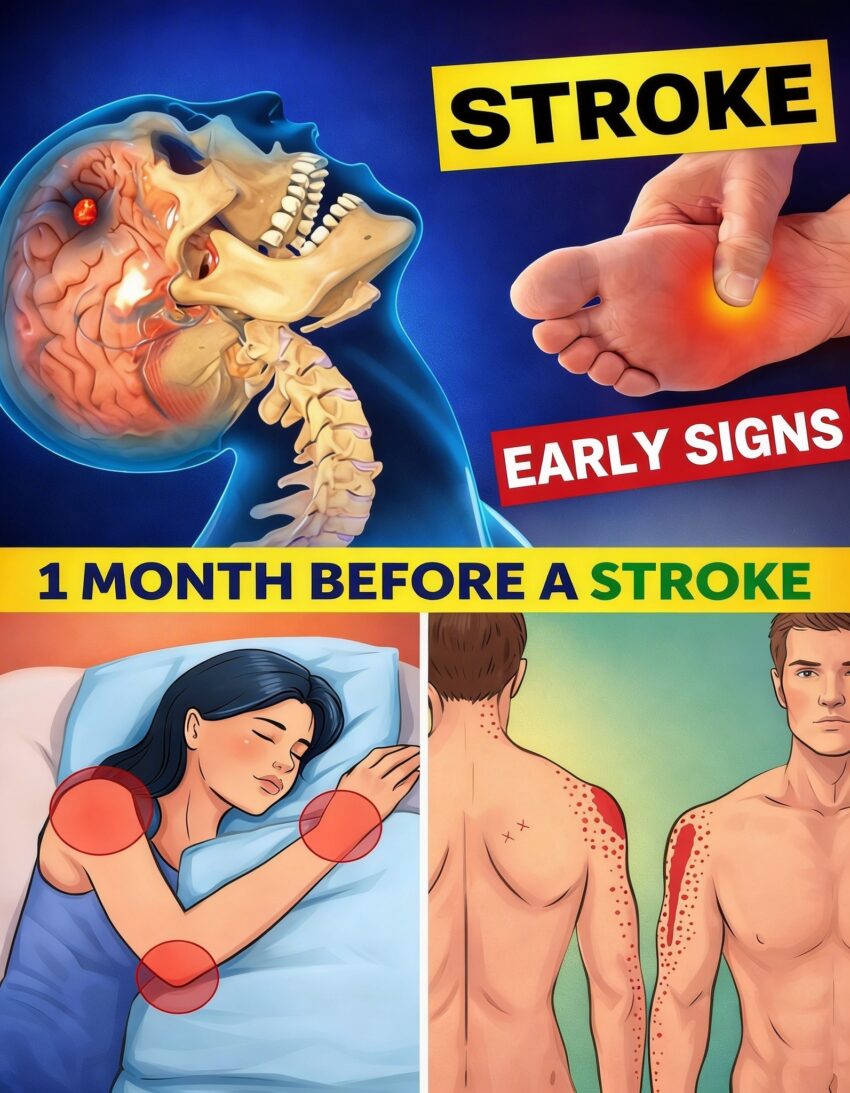
That headline mixes some truth with exaggeration. A stroke doesn’t usually give a neat “1-month warning list,” but there can be early warning signs—especially brief episodes like a Transient Ischemic Attack (mini-stroke). These can happen days or weeks before a major stroke and should never be ignored.
⚠️ Possible early warning signs (don’t wait on these)
1. Brief weakness or numbness
- Especially on one side of the body
- Comes and goes
2. Temporary speech problems
- Slurred speech
- Trouble finding words
3. Short episodes of vision loss
- Blurred or darkened vision in one eye
4. Sudden dizziness or loss of balance
- Feeling unsteady without a clear reason
5. Severe headache (unusual for you)
- Sudden and intense
6. Facial drooping (even briefly)
- One side looks uneven
7. Confusion or trouble understanding
- Difficulty following conversations
8. Unusual fatigue or weakness
- Not specific, but can accompany other signs
👉 These symptoms may last minutes to hours and disappear—that’s exactly why people ignore them.
🚨 If symptoms happen NOW
Use FAST:
- Face drooping
- Arm weakness
- Speech difficulty
- Time → go to hospital immediately
🛡️ 9 practical ways to reduce stroke risk
1. Control blood pressure
Biggest risk factor for Stroke
2. Manage diabetes
Keep blood sugar stable
3. Lower cholesterol
Diet + medication if needed
4. Quit smoking
Major risk reducer
5. Stay physically active
Even daily walking helps
6. Eat a balanced diet
- Less salt and processed food
- More fruits, vegetables, whole grains
7. Maintain a healthy weight
Reduces multiple risk factors
8. Limit alcohol
Excess increases stroke risk
9. Take medications as prescribed
Especially for BP, cholesterol, or heart issues
🧠 Reality check
- Not everyone gets early warning signs
- When they do appear, they’re often brief and easy to dismiss
- Acting early can prevent a major stroke
✅ Bottom line
There’s no guaranteed “1-month warning,” but short-lived symptoms (like a TIA) are a serious red flag. Prevention and quick action matter far more than memorizing lists.
If you want, I can help you assess your personal stroke risk based on your habits and health.
