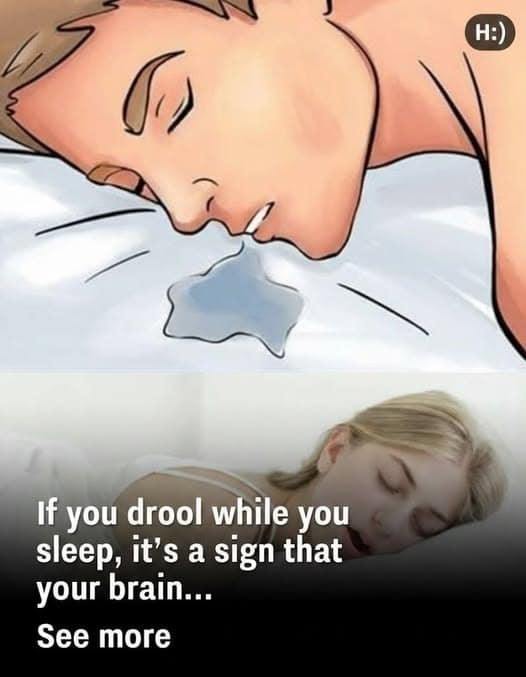
That’s another viral claim that twists a normal body function into something dramatic.
Drooling during sleep (called Sialorrhea) usually has simple, physical causes—not some special “brain signal.”
🧠 What drooling actually means
1. Sleep position (most common)
- Sleeping on your side or stomach
- Gravity lets saliva escape
2. Deep or relaxed sleep
- Muscles in your face and mouth relax
- You swallow less frequently
👉 This is normal—not a sign of brain damage or anything unusual
3. Nasal congestion
- Blocked nose → mouth breathing
- Saliva pools and leaks out
4. Acid reflux or digestion issues
- Can increase saliva production at night
5. Dental or bite issues
- Mouth doesn’t fully close during sleep
⚠️ When it might be a concern
Occasional drooling = normal
But check it if it’s:
- Excessive or worsening
- Happens with choking or trouble swallowing
- Accompanied by neurological symptoms
In rare cases, it can be linked to conditions like
Parkinson’s disease or
Sleep apnea
❌ What the viral claim gets wrong
- “It means your brain is…” → ❌ no scientific basis
- It’s not a sign of intelligence, damage, or special function
✅ Bottom line
Drooling in sleep is usually harmless and related to position, breathing, or relaxation—not your brain doing something unusual.
If you want, tell me how often it happens and your sleep habits—I can help pinpoint the exact cause.
