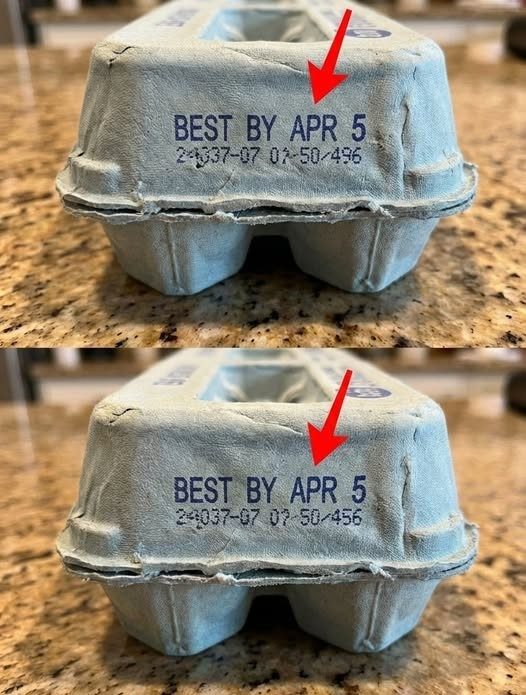
Those codes on egg cartons aren’t secret at all—they’re there to help you know how fresh and traceable the eggs are.
🥚 The most important code: the pack or expiry date
Most cartons show a “best before” or expiry date.
This tells you how long the eggs should stay fresh when stored properly.
🧠 The Julian (3-digit) date code
Some cartons include a 3-digit number like 001–365.
👉 This is the day of the year the eggs were packed:
- 001 = Jan 1
- 032 = Feb 1
- 365 = Dec 31
So you can tell exactly how fresh they are.
🏭 Plant or facility code
A code showing where the eggs were processed:
- Helps trace the source if there’s a problem
- Used for food safety tracking
🐔 Other labels you might see
- Grade (A, AA) → quality of the egg
- Size (M, L, XL) → weight category
- Terms like “organic” or “free-range” (regulated differently by country)
🧪 Freshness tip (simple test)
Put an egg in water:
- Sinks flat → very fresh
- Stands upright → older but usable
- Floats → should be discarded
❌ What viral posts get wrong
- These codes aren’t hidden messages or “secrets”
- They’re standard food safety information
✅ Bottom line
Egg carton codes help you understand freshness, origin, and quality—nothing mysterious, just practical info.
If you want, you can share a code from your carton and I’ll decode it for you.
