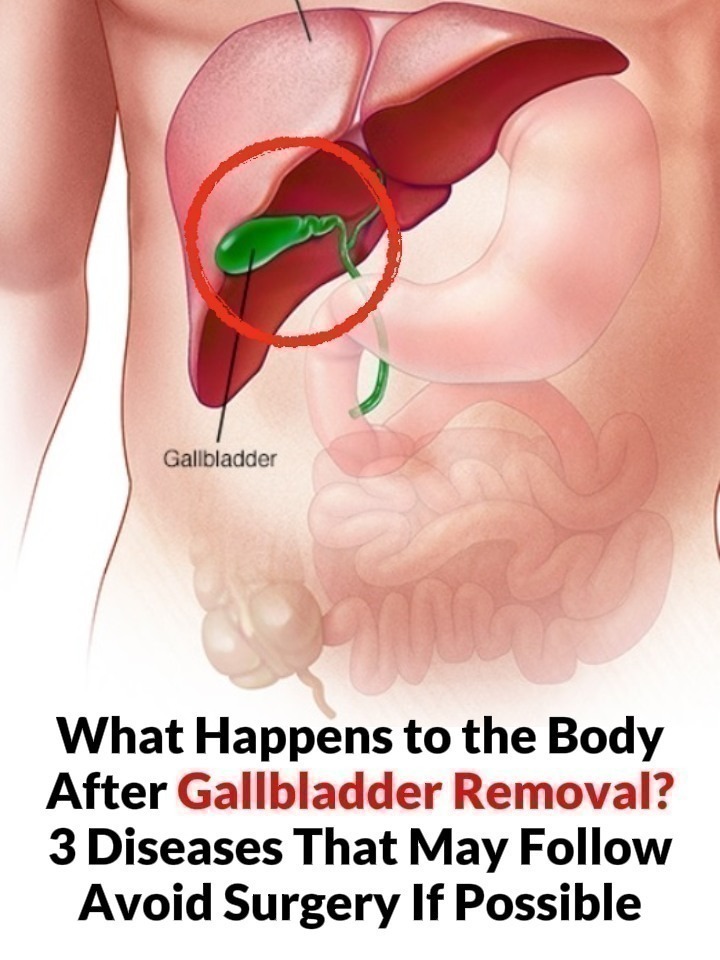
That headline is a bit alarmist. Cholecystectomy is a very common operation, and for many people (especially with painful or complicated gallstones) it’s the right and safe treatment. Saying “avoid surgery if possible” ignores situations where delaying it can actually make things worse.
🧠 What the gallbladder does
The gallbladder stores bile and releases it when you eat fatty foods. After removal:
- Your liver still makes bile
- Bile flows directly into the intestine instead of being stored
Most people digest food normally after a short adjustment period.
🔄 What changes after surgery
1. Digestion may feel different (temporarily)
Some people notice:
- Bloating
- Loose stools after fatty meals
This usually improves over weeks to months.
2. Continuous bile flow
Instead of a “burst” of bile, there’s a steady trickle. Most bodies adapt well to this.
⚠️ Conditions that can happen (but are not guaranteed)
1. Postcholecystectomy syndrome
- Symptoms: abdominal pain, indigestion, diarrhea
- Not very common, and often manageable
2. Bile acid diarrhea
- Happens in a small percentage of people
- Can usually be treated with medication and diet
3. Slight metabolic risks
Some studies suggest a small increased risk of issues like:
- Fatty liver
- Changes in cholesterol balance
But these are influenced more by diet and lifestyle than the surgery itself.
❗ Important reality check
These risks are:
- Not guaranteed
- Often mild or manageable
- Usually less dangerous than untreated gallbladder disease
Untreated gallstones can lead to serious conditions like:
- Acute pancreatitis
- Cholecystitis
- Blocked bile ducts (which can be life-threatening)
🥗 How to stay healthy after surgery
- Eat smaller, balanced meals
- Reduce very fatty or greasy foods (especially early on)
- Gradually reintroduce foods
- Stay active
✅ Bottom line
Gallbladder removal is not something to fear when it’s medically needed. The “3 diseases” framing exaggerates the downsides.
For most people, life after surgery is normal or even better—especially if they were suffering from painful gallstones.
If you want, I can help you figure out when gallbladder surgery is truly necessary vs when it can safely be delayed.
