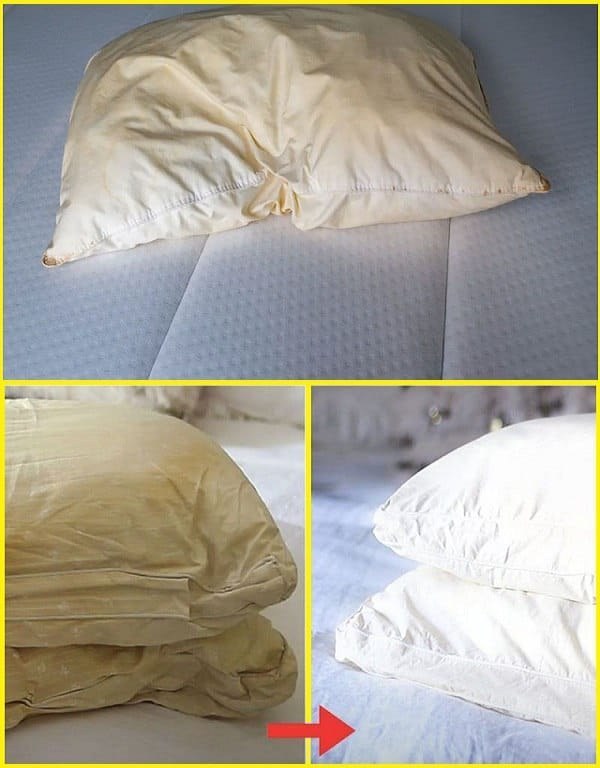
That headline promises “white and sweet-scented” pillows, but the real trick is removing sweat, oils, and detergent buildup without damaging the filling. Here’s a method that actually works.
🧺 First: check the pillow type
- Machine-washable: cotton, polyester, down/feather
- Don’t soak/wash fully: memory foam or latex (clean spot-only)
🧼 Method for washable pillows
1. Pre-treat yellow stains
Mix:
- 2–3 tbsp detergent
- 1 tbsp baking soda
- A little water to make a paste
Rub gently onto stains. Let sit 20–30 minutes.
2. Wash properly
- Use warm water
- Add normal detergent
- Optional: add ½ cup white vinegar in the softener slot (removes odor and residue)
👉 Wash two pillows at once to balance the machine.
3. Extra rinse
Run an extra rinse cycle to remove all soap—this is key for softness.
4. Dry completely (very important)
- Tumble dry on low heat
- Add clean tennis balls or dryer balls
This:
- Fluffs the pillow
- Prevents clumping
- Stops musty smell
👉 Make sure they are fully dry inside—damp filling = bad odor later.
🌬️ For memory foam / latex pillows
Do NOT soak. Instead:
- Vacuum the surface
- Spot clean with mild detergent
- Air dry completely
🌿 Getting a “fresh scent” (the safe way)
- Don’t overuse fragrance products
- A little vinegar in the wash removes bad smells instead of masking them
- Sun-drying (if possible) naturally freshens and kills odor-causing bacteria
⚠️ Common mistakes
- ❌ Using too much detergent → leaves residue, makes pillows stiff
- ❌ Not drying fully → causes mildew smell
- ❌ Washing foam pillows → ruins structure
- ❌ Expecting instant “pure white” like bleach ads (some stains are permanent)
🧠 How often to clean
- Every 3–4 months for regular use
- More often if you sweat a lot or have allergies
✅ Bottom line
Clean pillows properly and they’ll feel fresher, softer, and lighter—but the key isn’t tricks, it’s:
thorough washing + complete drying + not overloading with chemicals.
If you want, I can show you how to tell when a pillow is too old and should be replaced instead of cleaned.
