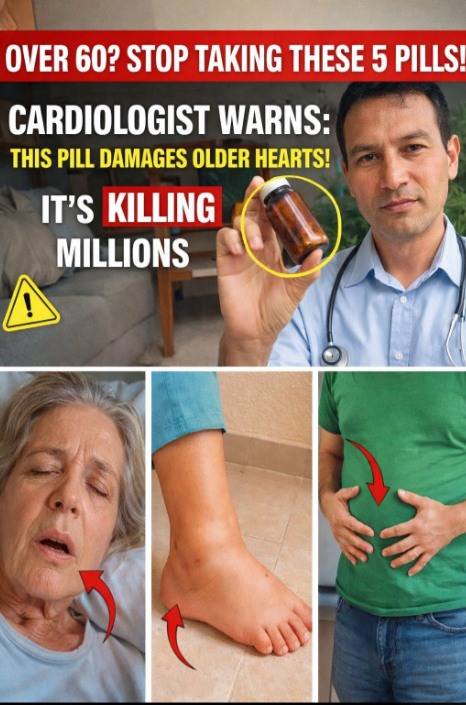
That headline is meant to scare you. There isn’t one mystery pill that’s secretly “damaging the hearts of older adults.” What cardiologists actually warn about is misuse or the wrong drug for the wrong person.
Here’s the reality in plain terms:
🧠 The drugs these videos usually point at
1) Common painkillers (NSAIDs)
Examples: Ibuprofen, Diclofenac
- Can raise blood pressure
- May cause fluid retention
- Long-term/high-dose use can worsen heart conditions, especially in older adults
👉 Occasional use is usually fine; daily use without supervision is where risk rises.
2) Decongestants in cold medicines
Example: Pseudoephedrine
- Can increase heart rate and blood pressure
- Not ideal for people with hypertension or heart disease
3) Certain older diabetes drugs
Example: Rosiglitazone
- Previously linked to higher heart risk
- Now restricted/less commonly used
4) Some heart medications (if misused)
Example: Digoxin
- Helpful when prescribed properly
- Dangerous if dose is too high or not monitored
⚠️ Why older adults are more at risk
- Slower metabolism of drugs
- More likely to take multiple medications
- Higher chance of underlying heart or kidney issues
🚫 What the headline gets wrong
- ❌ No single pill harms everyone
- ❌ These medicines aren’t “bad”—they’re widely used safely
- ❌ Risk depends on dose, duration, and individual health
✅ What actually protects your heart
- Avoid long-term self-medication (especially painkillers)
- Follow prescribed doses
- Inform your doctor about all medications and supplements
- Monitor blood pressure regularly
🚩 Warning signs to watch
- Swelling in legs
- Shortness of breath
- Irregular heartbeat
- Sudden rise in blood pressure
🧠 Bottom line
The warning is exaggerated, but not completely baseless.
👉 Some common pills can affect the heart in seniors
👉 The real issue is how they’re used—not their existence
If you have a specific medicine in mind, tell me—I can explain its real risk level for you instead of the generic scare headlines.
