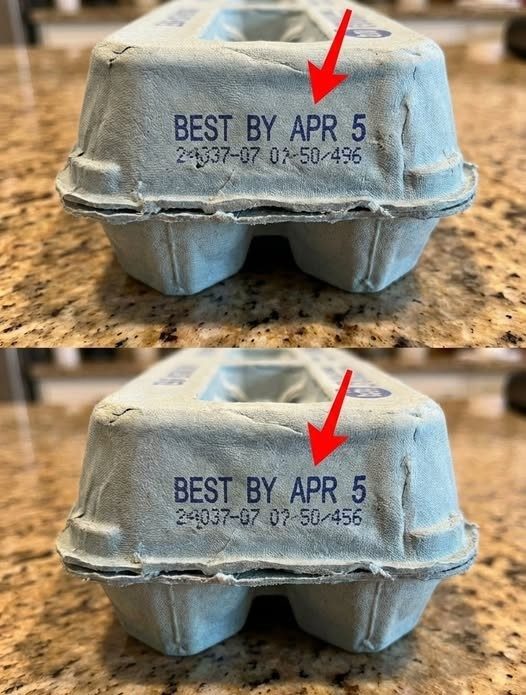
Those numbers and stamps on egg cartons aren’t secret at all—they’re traceability and freshness info so producers and regulators can track where eggs came from and how old they are.
🥚 1. The 3-digit “Julian date” (pack date)
- A number from 001 to 365
- Shows the day of the year the eggs were packed
Example:
- 001 = Jan 1
- 120 = April 30
- 365 = Dec 31
👉 Fresher eggs have a higher number closer to today’s date
🏭 2. Plant/processing code
Often starts with letters/numbers (e.g., “PK-123” or similar)
- Identifies the facility where eggs were packed
- Helps trace batches if there’s a quality or safety issue
📅 3. Expiry / “Best before” date
- Usually printed clearly on the carton
- Indicates how long eggs are expected to stay fresh when refrigerated
🐔 4. Egg grading labels
You might see terms like:
- Grade A / A+ → higher quality (clean shells, firm whites)
- Size labels (Small, Medium, Large)
🌾 5. Farming method (marketing labels)
These are not codes but claims, such as:
- Cage-free
- Free-range
- Organic
👉 These describe how hens are raised, not freshness
🧠 Important reality check
- The pack date is often more useful than the expiry date
- Eggs can still be usable after the printed date if stored properly
🥄 Simple freshness test
Put an egg in water:
- Sinks → fresh
- Stands upright → older but usable
- Floats → discard
✅ Bottom line
👉 Egg carton “codes” are just dates and tracking info
👉 They help you judge freshness and safety—nothing mysterious
If you want, you can share the exact code on your carton, and I’ll decode it for you step-by-step.
