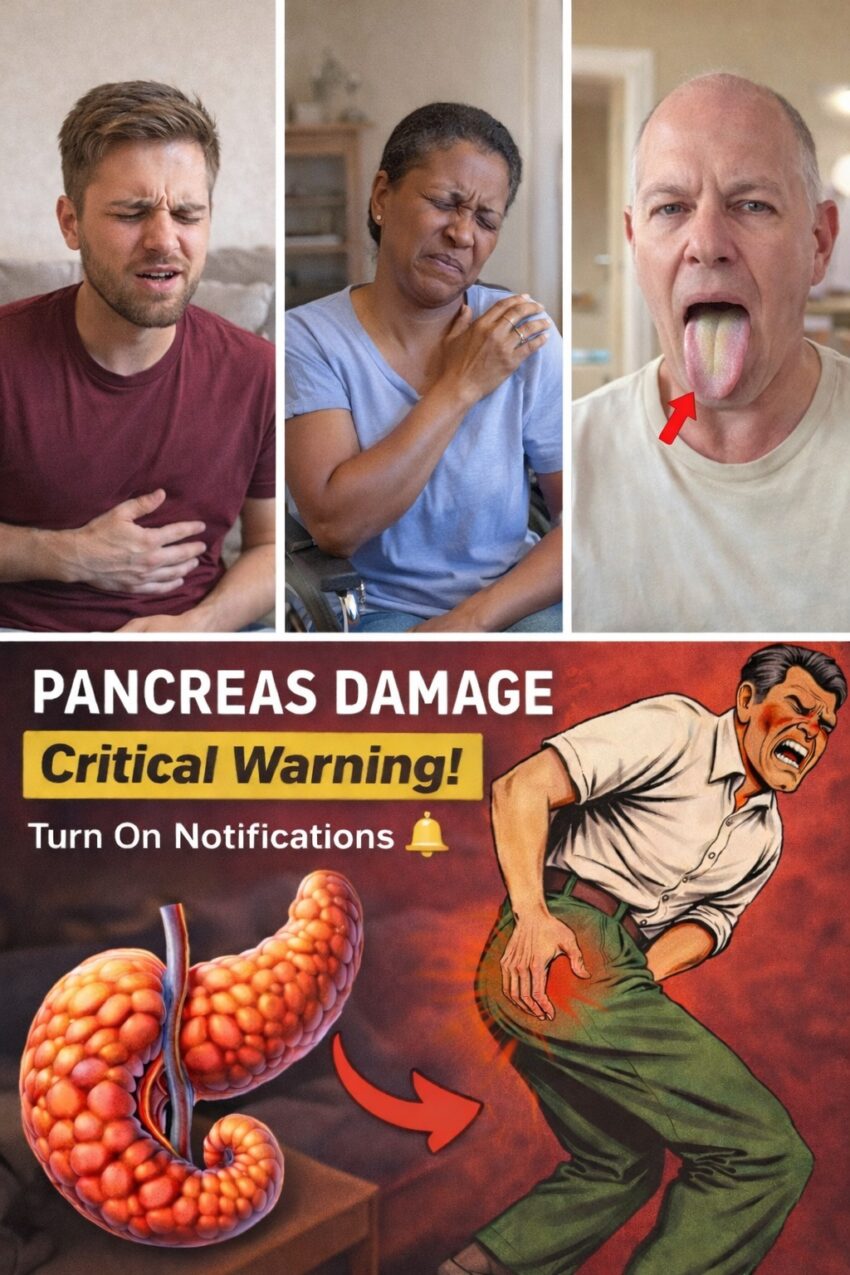
That headline is another attention-grabber. Exocrine Pancreatic Insufficiency (EPI) is a real condition—but it doesn’t show up as a vague list of “13 signs you ignore every day.” The symptoms are usually specific and persistent, not subtle everyday feelings.
🧠 What pancreatic insufficiency actually is
EPI happens when your pancreas doesn’t make enough digestive enzymes.
👉 Result: your body can’t properly digest fats, proteins, and some vitamins
⚠️ Real symptoms (evidence-based)
These are the most common and medically recognized signs:
1. Fatty, greasy stools (steatorrhea)
- Pale, oily, foul-smelling
- May float and be hard to flush
2. Chronic diarrhea
- Loose stools that don’t improve easily
3. Unexplained weight loss
- Even if you’re eating normally
4. Bloating and gas
- Especially after fatty meals
5. Abdominal discomfort
- Mild to moderate pain or cramping
6. Nutrient deficiencies
Because fat absorption is poor:
- Low vitamins A, D, E, K
- Weak bones, fatigue, easy bruising
7. Fatigue and weakness
- Due to malnutrition over time
🔍 What causes it
EPI doesn’t just “appear randomly.” It’s usually linked to conditions like:
- Chronic Pancreatitis
- Cystic Fibrosis
- Pancreatic Cancer
- Long-standing diabetes
- Pancreatic surgery
🚫 What those viral lists get wrong
They often include vague or misleading claims like:
❌ “Feeling tired sometimes”
❌ “Occasional stomach discomfort”
❌ “Waking up at night”
👉 These are too general and can be caused by dozens of other things.
⚠️ When you should actually worry
See a doctor if you have:
- Oily or floating stools regularly
- Ongoing diarrhea
- Unintentional weight loss
- Signs of malnutrition
These are not normal and shouldn’t be ignored.
✅ Good news
EPI is treatable with:
- Pancreatic enzyme replacement therapy (PERT)
- Diet adjustments
- Vitamin supplementation
🧾 Bottom line
Pancreatic insufficiency doesn’t hide behind random “13 daily signs.”
It usually shows up with clear digestive problems—especially fatty stools and weight loss.
If you want, I can help you compare EPI symptoms vs common stomach issues (like IBS or indigestion), so you can tell the difference more clearly.
