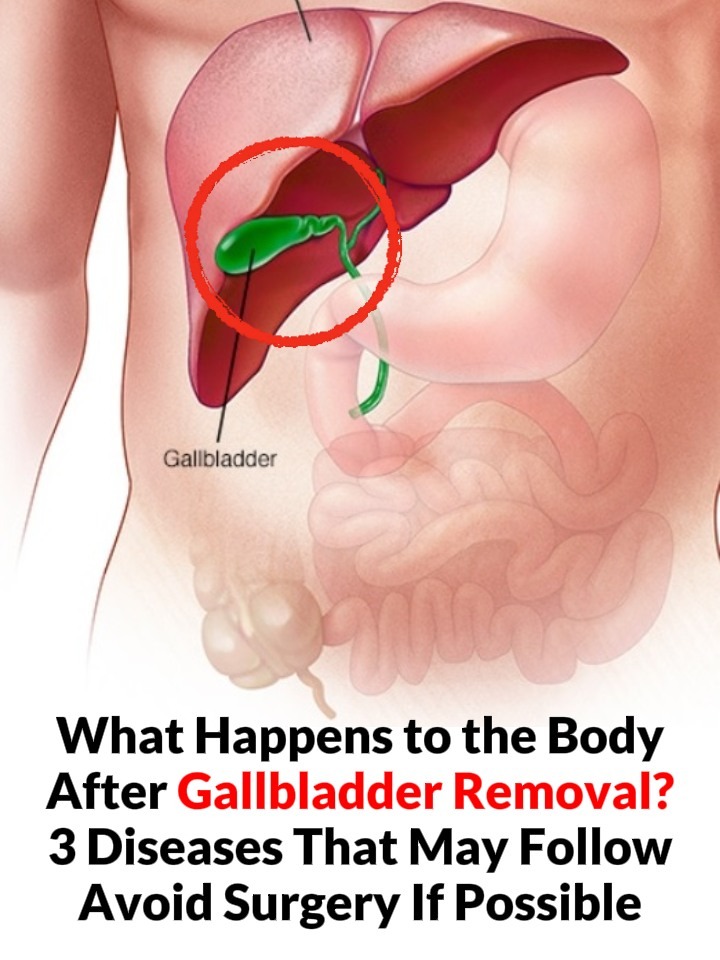
That headline mixes a bit of truth with a lot of fear. Cholecystectomy is one of the most common surgeries worldwide—and for many people, it solves painful gallbladder problems safely. The idea that you should “avoid it at all costs” isn’t accurate.
🧠 What the gallbladder does
The Gallbladder stores bile from the liver and releases it when you eat fatty foods.
👉 After removal:
- Your liver still makes bile
- But it flows continuously into the intestine instead of being stored
🔄 What changes after surgery
Most people:
- Recover fully
- Digest food normally
- Live without major long-term issues
But some temporary or mild changes can happen:
1. Digestive changes
- Loose stools or diarrhea (especially early on)
- Trouble with very fatty meals
2. Bloating or gas
- Usually improves over time
3. Mild fat digestion issues
- Typically manageable with diet
⚠️ Conditions that can occur (but are not common)
These are likely what those “3 diseases” headlines refer to:
1. Postcholecystectomy Syndrome
- Ongoing pain, bloating, or diarrhea
- Happens in a small percentage of patients
2. Bile Acid Diarrhea
- Chronic diarrhea due to continuous bile flow
- Treatable with medication
3. Choledocholithiasis
- Rarely, stones can remain or form in bile ducts
- Can be treated if detected
🚫 What the internet exaggerates
❌ “You won’t be able to digest food properly anymore”
❌ “Everyone develops serious disease after surgery”
❌ “It ruins your liver or pancreas”
👉 These claims are not supported by medical evidence.
⚠️ When surgery is actually necessary
Doctors recommend removal when you have:
- Repeated gallbladder attacks
- Painful gallstones
- Infection or inflammation
👉 Delaying surgery in these cases can lead to serious complications like infection or pancreatitis.
✅ How to stay well after removal
- Eat smaller, balanced meals
- Limit very fatty or fried foods (especially early on)
- Gradually return to normal diet
- Follow your doctor’s advice
🧾 Bottom line
Gallbladder removal doesn’t “cause 3 diseases” for most people.
It’s generally safe, effective, and often necessary when problems arise.
If you want, I can explain how to tell if gallbladder pain is serious or what symptoms mean you should consider surgery.
