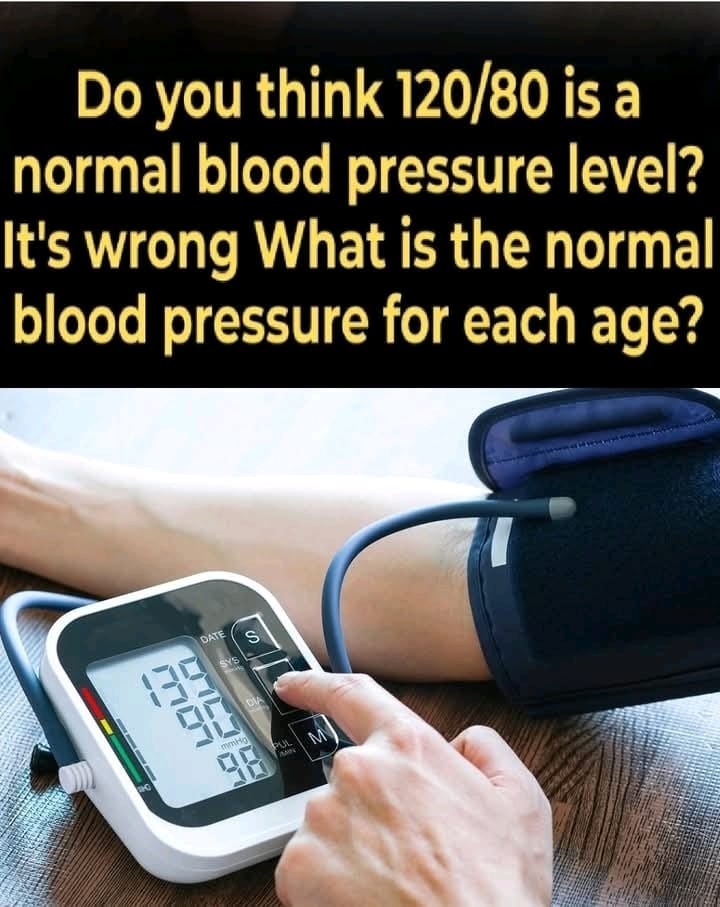
The idea that there’s a completely different “normal blood pressure” for every age is a bit outdated. Modern medicine uses general targets for adults, with only slight adjustments for age and health.
🧠 What is blood pressure?
Blood pressure is measured in two numbers:
- Systolic (top): pressure when the heart beats
- Diastolic (bottom): pressure when the heart rests
📊 Standard adult ranges
According to current guidelines:
- Normal: below 120 / 80 mmHg
- Elevated: 120–129 / below 80
- High (hypertension): 130/80 or higher
→ This is called Hypertension
👶 Children & teens (simplified)
For younger people, it varies by height, age, and sex—but roughly:
- Children: ~90/60 to 110/70
- Teens: ~100/65 to 120/80
Doctors usually use growth charts rather than fixed numbers.
👨 Adults (18–60)
- Ideal: <120/80
- Still considered okay: up to around 129/79
👴 Older adults (60+)
- Slightly higher readings are common
- Many doctors aim for:
- Around <130/80 if healthy
- Sometimes a bit higher if there are risks (to avoid dizziness/falls)
⚠️ Important reality
👉 Blood pressure doesn’t suddenly “reset” with age
- A reading like 150/90 is NOT normal, even in older adults
- It may be tolerated in some cases, but it’s still considered high
🚫 Common myths
❌ “Higher BP is normal as you age”
❌ “150/90 is fine after 60”
❌ “Only systolic matters”
👉 These are outdated or oversimplified.
⚠️ When to be concerned
- Consistent readings ≥130/80
- Symptoms like headache, dizziness, chest pain
- Very high readings (e.g., 180/120 → urgent care)
🧾 Bottom line
There isn’t a completely different “normal” for each age.
For most adults, the goal is still around or below 120/80 mmHg, with slight flexibility as you get older.
If you want, tell me your recent readings—I can help you interpret whether they’re normal or something to watch.
