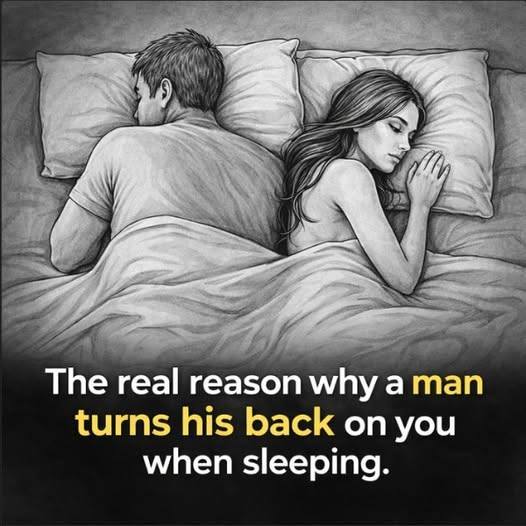
That claim is another overinterpreted “body language” myth.
👉 Sleeping position—like turning your back—doesn’t have a single fixed meaning.
🛏️ What it usually means
Most of the time, it’s about comfort, not emotions:
1. Physical comfort
- People shift to relieve pressure on the back, shoulders, or neck
- Side-sleeping is simply more comfortable for many
2. Temperature regulation
- Turning away can help reduce body heat
- Especially common in warm climates or with heavy bedding
3. Habit and sleep style
- Everyone has a preferred position
- Some people naturally sleep facing one side every night
4. Sleep quality
- Less contact can mean deeper, uninterrupted sleep
❤️ What relationship experts actually say
Relationship researchers (like Richard Wiseman) found:
- Distance and comfort matter more than direction
- Many happy couples sleep back-to-back
- What matters is how you interact when awake, not just how you sleep
⚠️ When it might mean something
Context matters. It could reflect emotional distance only if:
- It’s a sudden change from usual behavior
- Combined with less communication or affection
- There are ongoing relationship issues
👉 Even then, it’s just a possible clue—not proof
🚫 Common myths
❌ “Turning away means loss of love”
❌ “It shows cheating or disinterest”
❌ “Sleeping positions reveal relationship secrets”
👉 These are not reliable conclusions
🧾 Bottom line
If your partner turns their back while sleeping, it usually means they’re getting comfortable—not sending a message.
If you want, I can explain what different sleeping positions can suggest (realistically, not mythically) or help you interpret changes in behavior more accurately.
