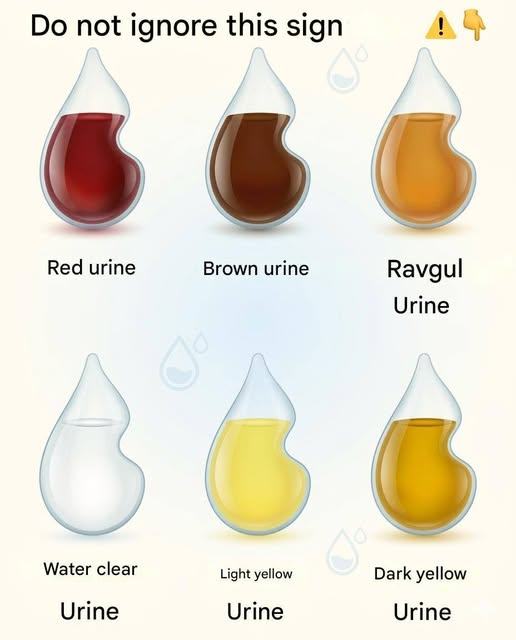
Urine color can tell you some useful things about hydration and health—but it’s not a diagnosis on its own. Think of it as a quick clue, not a final answer.
🚽 What different urine colors can mean
🟡 Pale yellow (straw color)
👉 Normal and healthy
- Well hydrated
- Kidneys working properly
💛 Dark yellow
👉 Mild dehydration
- Drink more water
🟠 Amber or orange
👉 Possible dehydration or other causes
- Certain vitamins or medications
- Sometimes liver or bile issues
⚪ Clear (almost colorless)
👉 Very hydrated
- Possibly drinking more water than needed
🔴 Pink or red
👉 Needs attention
- Could be blood → Hematuria
- Or harmless causes (beets, berries)
👉 If unexplained → get checked
🟤 Brown or cola-colored
👉 Possible serious issue
- Dehydration, liver problems, or muscle breakdown
🟢 or 🔵 Green/blue
👉 Rare
- Usually from medications or dyes
- Sometimes infection
🫧 Foamy or bubbly
👉 Possible protein in urine
- Could relate to kidney issues like Chronic Kidney Disease
⚠️ When to take it seriously
- Red or brown urine without a clear food cause
- Persistent dark color despite hydration
- Foam + swelling or fatigue
- Pain or burning while urinating
🚫 Common myths
❌ “Clear urine is always best”
❌ “Color alone can diagnose disease”
❌ “Any yellow means dehydration”
👉 These are oversimplified
🧾 Bottom line
Urine color is a useful daily signal, mainly about hydration—but unusual or persistent changes should be checked.
If you want, describe your urine color and any symptoms, and I can help you figure out whether it’s normal or worth checking.
