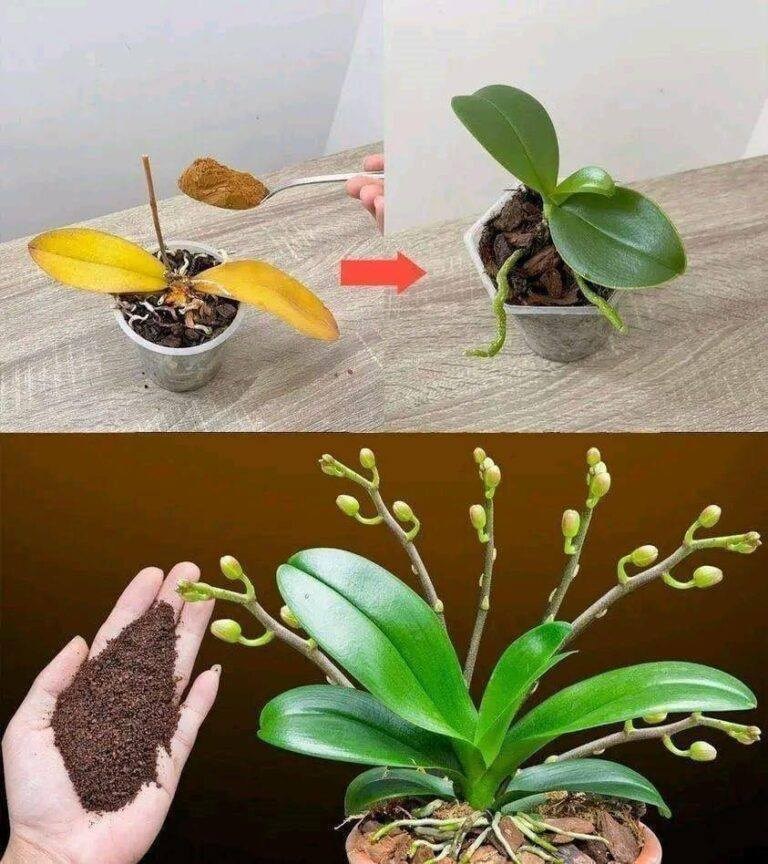
That claim is another classic plant “hack” that skips the important details.
There’s no single teaspoon of anything that will magically make an orchid burst into blooms.
Orchids—especially Phalaenopsis orchid—flower based on light, temperature changes, and overall care, not quick fixes.
🌸 What actually makes orchids bloom
1. Light (the biggest factor)
- Bright, indirect sunlight is essential
- Too little light = lots of leaves, no flowers
👉 This is the #1 reason orchids don’t bloom.
🌡️ 2. Temperature difference
- Orchids need a cooler night period (about 5–10°C lower than daytime)
- This triggers the plant to produce a flower spike
💧 3. Proper watering
- Water when roots turn silvery, not constantly
- Overwatering = root rot = no blooms
🌿 4. Balanced fertilizer
- Use a diluted orchid fertilizer every 2–4 weeks
- Not a random kitchen ingredient
🧪 What that “teaspoon trick” usually is (and why it’s risky)
These viral tips often suggest:
- Sugar water → can attract pests and mold
- Baking soda → can damage roots if misused
- Milk or rice water → may rot or smell over time
👉 None of these reliably trigger flowering.
⚠️ The truth
Orchid blooming is a slow biological process, not an instant reaction.
If a plant blooms after a “teaspoon trick,” it was likely already about to bloom.
✅ What to do instead (simple plan)
- Place near a bright window (no harsh direct sun)
- Give cooler nights for 2–3 weeks
- Feed lightly with proper fertilizer
- Be patient—blooms can take weeks to form
Bottom line
There’s no miracle teaspoon—consistent care beats viral hacks every time.
If you want, tell me what your orchid looks like (leaves, roots, last bloom), and I can help you figure out exactly why it isn’t flowering.
