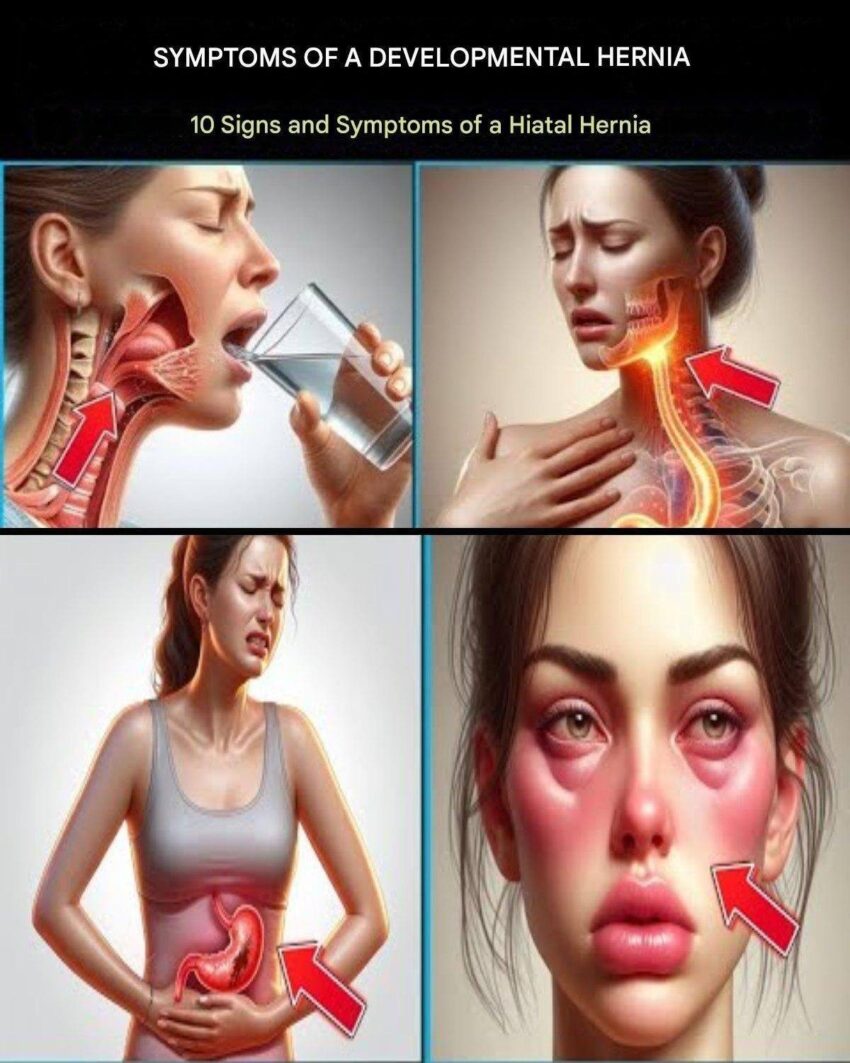
That headline is a bit dramatic. A hiatal hernia often causes no symptoms at all. When symptoms do happen, they’re usually related to acid reflux rather than the hernia itself.
Here are the real, commonly reported symptoms:
⚠️ Possible signs of a hiatal hernia
🔥 1. Heartburn
- Burning feeling in the chest, especially after eating
- Worse when lying down
🍽️ 2. Acid reflux
- Stomach acid moving up into the throat
Linked to gastroesophageal reflux disease
😖 3. Chest discomfort or pain
- Can feel like pressure or burning
- Sometimes confused with heart issues
😬 4. Difficulty swallowing
- Feeling like food is stuck
🤢 5. Regurgitation
- Sour or bitter liquid coming back into the mouth
😮💨 6. Shortness of breath
- Large hernias can press on the diaphragm
🥴 7. Feeling full quickly
- Especially after small meals
🫧 8. Bloating or burping
- Excess gas or discomfort
🩸 9. Anemia (in rare cases)
- Slow bleeding from the stomach lining
😴 10. Symptoms worse when bending or lying down
- Gravity makes reflux easier
⚠️ Important reality check
- Many of these symptoms are common and not specific
- Most people with a hiatal hernia don’t even know they have one
- Diagnosis usually requires tests (like endoscopy)
🧠 What actually helps
- Eat smaller meals
- Avoid lying down after eating
- Reduce spicy/fatty foods
- Maintain a healthy weight
- Medications if needed
🚨 When to seek medical help
- Severe chest pain (rule out heart problems)
- Trouble swallowing getting worse
- Vomiting blood or black stools
🧠 Bottom line
A hiatal hernia is usually manageable and often harmless, but symptoms mainly come from acid reflux—not the hernia itself.
If you want, I can help you figure out whether your symptoms sound like reflux, a hiatal hernia, or something else.
