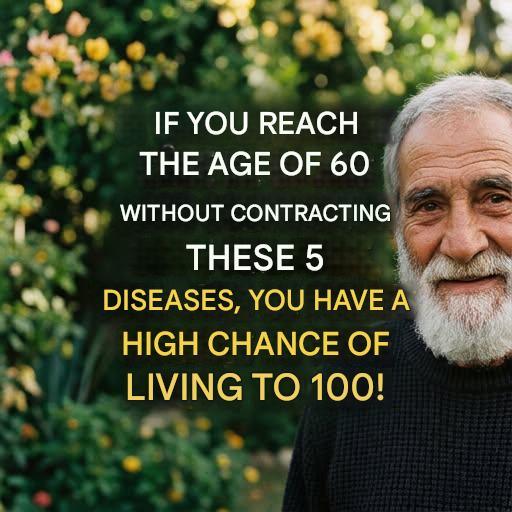
That headline is catchy—but it oversimplifies things. There isn’t a guaranteed set of “5 diseases” that determine whether you’ll live to 100. Longevity depends on many factors working together (genetics, lifestyle, environment, and access to care).
That said, reaching 60 without certain major chronic conditions does generally point to a healthier trajectory. Here are the types of conditions people usually mean—and why they matter:
🫀 1. Heart disease
Coronary Artery Disease is a leading cause of death worldwide.
Avoiding it by 60 suggests:
- Good blood pressure control
- Healthy cholesterol levels
- Lower long-term risk
🧠 2. Stroke
Stroke risk rises with age.
No history by 60 often means healthier blood vessels and better overall circulation.
🍬 3. Type 2 diabetes
Type 2 Diabetes affects multiple organs over time.
Avoiding it reduces risk of kidney disease, nerve damage, and heart issues.
🧬 4. Cancer (major types)
Cancer risk increases with age.
Reaching 60 without major cancers is a positive sign—but screening still matters.
🧠 5. Neurodegenerative disease
Conditions like Alzheimer’s disease can affect independence and lifespan.
Remaining cognitively healthy at 60 is a strong indicator of brain health.
⚠️ Reality check
Even if someone has had one of these conditions, they can still live a long life with good management. And someone with none of them could still develop issues later.
🧠 What actually predicts longevity better
Research consistently points to:
- Not smoking
- Staying physically active
- Healthy diet
- Stable weight
- Good sleep
- Strong social connections
- Regular medical checkups
✅ Bottom line
Avoiding major chronic diseases by 60 is a good sign, but it’s not a guarantee of reaching 100. Longevity is about ongoing habits, not just what you’ve avoided so far.
If you want, I can break down the top daily habits of people who live into their 90s and 100s—that’s where the real difference is.
