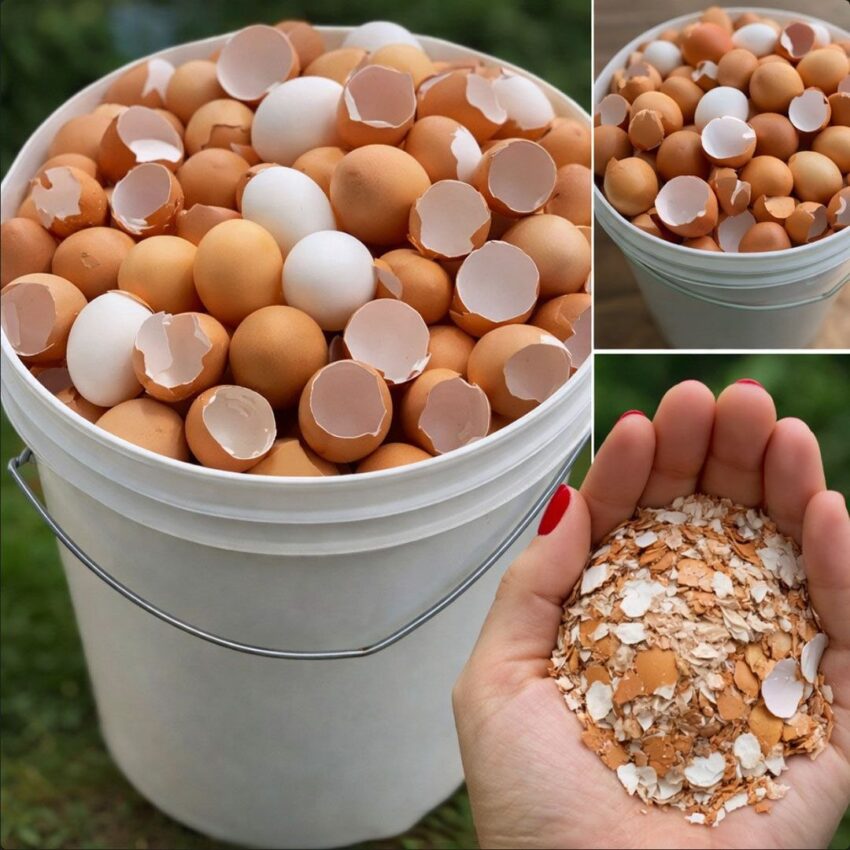
That headline is another “miracle hack” oversimplified. Boiling eggshells can be useful—but it doesn’t magically solve everything. Here’s what it actually does and how to use it properly.
🥚 What’s in eggshells?
Eggshells are mostly calcium carbonate (like chalk). When you boil them, some minerals can leach into the water.
✅ Real uses that can work
🌱 1. Natural plant fertilizer
- Crushed or boiled shells add calcium to soil
- Helpful for plants like tomatoes (can reduce issues like Blossom End Rot)
👉 Best use: crush finely or soak in water and use for watering plants.
🧼 2. Mild cleaning scrub
- Crushed shells act as a gentle abrasive
- Useful for scrubbing pots or sinks
🐓 3. Garden pest deterrent (limited effect)
- Sharp fragments may discourage some soft-bodied pests
- But it’s not a guaranteed solution
☕ 4. Compost booster
- Adds minerals to compost pile
- Breaks down slowly over time
⚠️ Popular claims that are exaggerated
- “Drink eggshell water for calcium” → risky if not sterilized properly
- “Instantly cures deficiencies” → not how nutrition works
- “Kills all garden pests” → inconsistent results
🧠 Safety tips
- Always wash and boil shells to reduce bacteria risk (like Salmonella)
- Dry and crush well before using
- Don’t rely on them as your only nutrient source
✅ Bottom line
Eggshells are useful for gardening, cleaning, and composting—but they’re not a miracle cure. The best results come from using them as a small supplement, not a standalone solution.
If you want, I can show you the most effective way to turn eggshells into a strong calcium fertilizer step-by-step.
