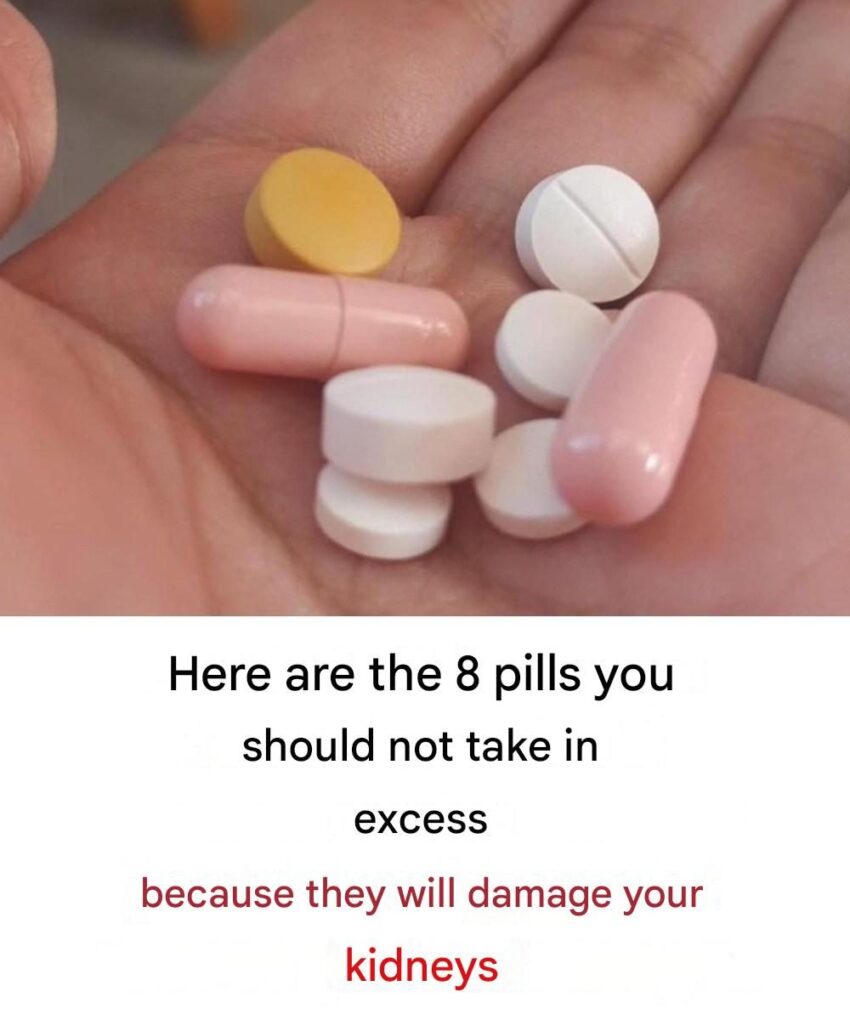
That headline is misleading. There isn’t a list of pills you should “never take.” Many medications are safe when used correctly—but some can stress or damage the kidneys if misused, taken long-term, or used by people with existing kidney problems.
Here are common categories doctors watch closely:
⚠️ 1. Painkillers (NSAIDs)
Examples: Ibuprofen, Naproxen
- Can reduce blood flow to the kidneys
- Risk increases with long-term or high-dose use
💊 2. Certain antibiotics
Some types can affect kidney function, especially at high doses or in older adults.
- Monitoring is often needed during treatment
❤️ 3. Blood pressure medications (in some cases)
Drugs like ACE inhibitors are usually protective for kidneys—but may require monitoring in certain situations (like dehydration or existing kidney disease).
💉 4. Contrast dyes (used in scans)
- Not a pill, but worth noting
- Can temporarily affect kidney function in vulnerable people
🌿 5. Herbal supplements
- Some “natural” products can be harmful or unregulated
- Risky ones may contain hidden toxins or heavy metals
💊 6. High-dose vitamins/minerals
Too much of certain nutrients (like vitamin D or calcium) can strain kidneys over time.
⚠️ Who is at higher risk?
- People with existing kidney disease
- Older adults
- People with diabetes or high blood pressure (Hypertension)
- Those taking multiple medications
🚨 Warning signs of kidney trouble
- Swelling in legs or face
- Fatigue
- Changes in urination
- Nausea
🧠 Bottom line
No common medication is “forbidden” for everyone. The real issue is dose, duration, and individual health. Always use medications as directed and check with a doctor if you take them regularly.
If you want, tell me what medicines you’re taking—I can explain which ones need caution and how to use them safely.
