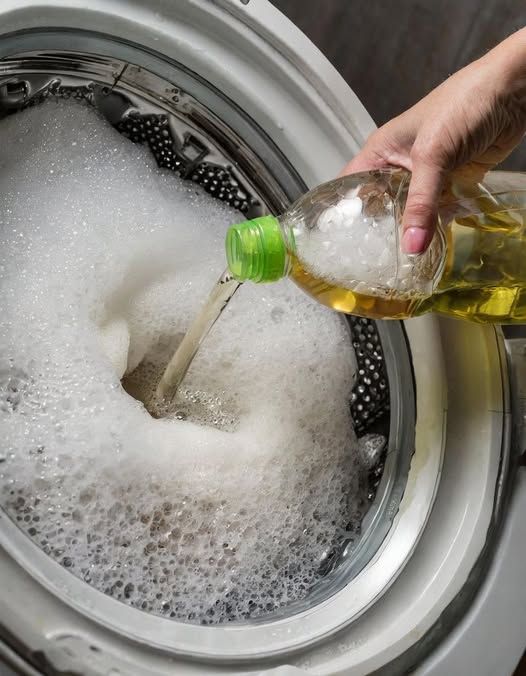
That claim is actually partly true—but it gets exaggerated a lot. White vinegar can help laundry, but only if you use it correctly and with realistic expectations.
What vinegar really does
Vinegar is a mild acid, so it can:
- Break down detergent residue that makes clothes stiff
- Help dissolve mineral buildup (common in hard water areas)
- Reduce mild odors
That’s why towels can feel softer and whites can look a bit brighter—not magically whiter, just cleaner.
The right way to use it
- Add ½ to 1 cup of white vinegar to the fabric softener compartment (not directly on clothes)
- Use it during the rinse cycle, not the wash cycle
- Wash as usual with your normal detergent
This helps rinse out leftover soap and minerals.
What most people do wrong
- ❌ Pouring vinegar directly onto clothes (can damage fabrics over time)
- ❌ Mixing vinegar with detergent or bleach (reduces effectiveness or can create fumes with bleach)
- ❌ Using too much (can wear down rubber seals in washing machines if overused)
Important limits
- It won’t replace detergent
- It won’t whiten heavily stained clothes like bleach can
- It won’t fix towels that are worn out or heavily damaged
When it works best
- Towels that feel stiff or scratchy
- Clothes washed in hard water
- Mild odor issues
Bottom line
Vinegar is a useful laundry helper, not a miracle solution. Used properly, it can make towels softer and keep whites looking fresher—but the dramatic claims you see online are overhyped.
If you want, I can show you the best method for specific problems like yellow stains, smelly towels, or dull whites.
