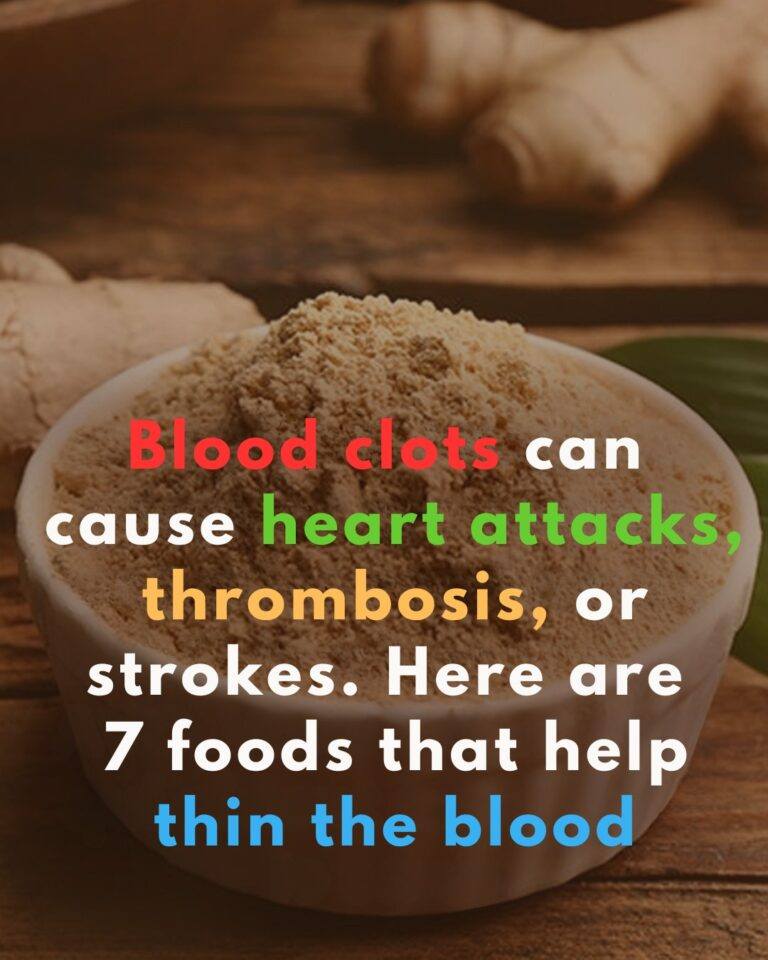
That headline is another half-true, overhyped health claim. Some foods can slightly affect blood clotting, but they are not “blood thinners” in the medical sense like Warfarin or Aspirin.
Still, here are 7 foods often mentioned—and what they actually do:
1. Garlic
Garlic
- Contains compounds that may reduce platelet stickiness
- Effect is mild unless eaten in large amounts
2. Ginger
Ginger
- May slightly slow clotting due to natural salicylates
- Helpful for inflammation too
3. Turmeric
Turmeric
- Contains curcumin, which has mild anti-clotting and anti-inflammatory effects
4. Fatty fish
Salmon, Mackerel
- Rich in omega-3 fatty acids
- Can reduce clotting tendency slightly over time
5. Berries
Blueberries, Strawberries
- Contain antioxidants that support blood vessel health
- Minor effect on clotting
6. Vitamin E–rich foods
Almonds, Sunflower seeds
- Vitamin E can mildly inhibit clot formation
7. Leafy greens (with a twist)
Spinach, Kale
- High in vitamin K, which actually helps clotting
- Important note: they don’t “thin” blood—this is often misunderstood
⚠️ Important reality check
- These foods do NOT replace prescribed blood thinners
- Their effects are mild and gradual, not immediate
- Eating more of them won’t “thin your blood” dramatically
⚠️ Safety warning
If someone is taking medications like:
- Warfarin
- Clopidogrel
Then suddenly increasing foods like garlic, ginger, or vitamin E can increase bleeding risk.
Bottom line
Think of these as heart-healthy foods, not treatments. They support circulation over time, but the “powerful blood-thinning foods” idea is overstated for clicks.
If you’re asking because of a specific issue (like high clot risk, stroke prevention, or medication use), I can give more tailored advice.
