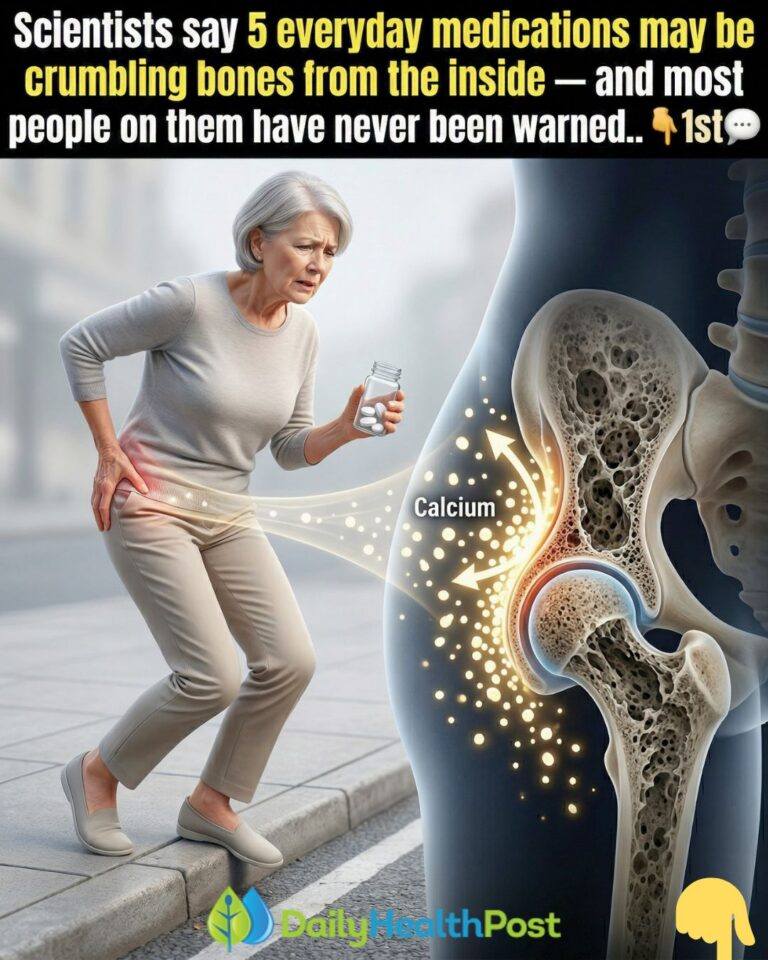
That headline is based on real science—but exaggerated to sound scary. Some medications can affect bone density over time, but:
- The risk depends on dose, duration, age, and overall health
- Doctors usually prescribe them because the benefits outweigh the risks
- Not everyone taking them will have bone problems
Here’s a clear, evidence-based breakdown of the main types of medications linked to bone loss:
🧠 1. Corticosteroids (the biggest culprit)
Examples: Prednisone
- Strong evidence they reduce bone formation and increase breakdown
- Long-term use can lead to osteoporosis and fractures
- Risk increases with higher doses and longer use (GoodRx)
👉 This is the most well-established drug-related cause of bone loss.
💊 2. Acid reflux drugs (PPIs)
Examples: Omeprazole
- Reduce stomach acid → less calcium absorption
- Linked to a higher fracture risk with long-term use (HealthCentral)
🧠 3. Antidepressants (SSRIs)
Examples: Sertraline
- May affect bone density and increase fracture risk
- Also may increase fall risk, which contributes to fractures (PubMed)
⚡ 4. Anti-seizure (antiepileptic) drugs
Examples: Phenytoin
- Can interfere with vitamin D metabolism
- Long-term use linked to reduced bone density (PubMed)
💉 5. Certain hormone or diabetes drugs
Examples: Pioglitazone
- Some drugs alter hormone levels or bone metabolism
- Can shift the body toward bone breakdown instead of formation (MDPI)
⚠️ Important reality check
- These medications don’t “crumble bones overnight”
- Effects usually happen slowly over months or years
- Many people take them without ever developing osteoporosis
🩺 Why doctors don’t always “warn”
It’s not usually negligence—it’s risk balancing:
- Steroids may be necessary for asthma or autoimmune disease
- Antidepressants may be essential for mental health
- PPIs can prevent serious stomach damage
Doctors often:
- Use the lowest effective dose
- Monitor bone health if risk is high
- Recommend calcium, vitamin D, or lifestyle changes
🛡️ How to protect your bones (if you take these)
- Get enough calcium and vitamin D
- Do weight-bearing exercise (walking, strength training)
- Avoid smoking and excess soda/alcohol
- Ask your doctor about bone density testing if long-term use
🧾 Bottom line
The claim is rooted in truth but exaggerated for clicks. Some medications can weaken bones—but:
- The risk is manageable
- The benefits often far outweigh the downsides
- Stopping medication on your own can be more dangerous
If you want, tell me which medicine you’re taking—I can give you a specific, personalized risk breakdown instead of generic headlines.
