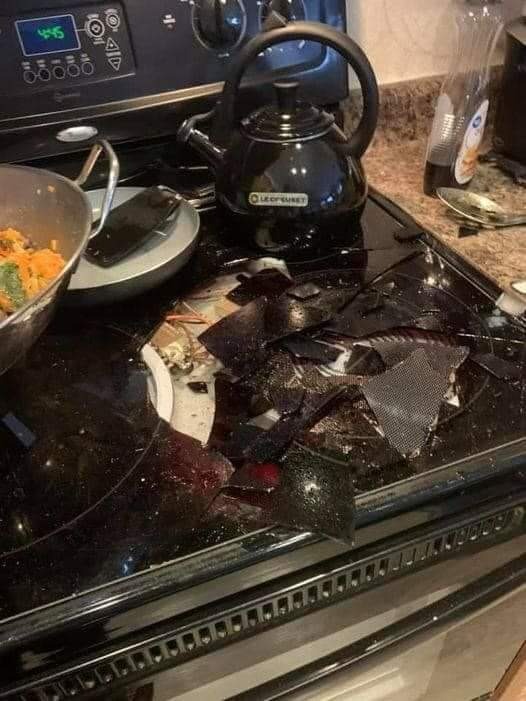
That headline isn’t totally wrong—glass (ceramic) cooktops are sturdy, but they can crack, scratch, or fail if abused. The “danger” is mostly damage to the stove (and sometimes burns/fire risk), not something mysterious.
Here are the real habits to avoid:
🔥 1. Sliding rough or heavy cookware
- Can scratch the surface permanently
- Especially risky with cast iron or rough-bottom pans
👉 Lift instead of slide.
🪨 2. Dropping heavy items
- Glass cooktops are tough—but not impact-proof
- A hard drop can crack or shatter the surface
🍳 3. Using the wrong cookware
- Warped or uneven bottoms heat poorly and stress the glass
- Some manufacturers warn against bare cast iron
👉 Use flat-bottom, smooth cookware.
❄️ 4. Sudden temperature shock
- Putting a cold pan on a hot surface (or vice versa)
- Spilling cold water on a hot burner
👉 Can cause thermal cracking
🧴 5. Letting spills burn on
- Sugar, syrup, or food can fuse to the surface
- Harder to clean and may cause damage over time
🧽 6. Using abrasive cleaners
- Steel wool or harsh scrubbers can scratch
👉 Use cleaners made for glass cooktops
🛑 7. Using it as a storage surface
- Placing heavy items or standing on it
👉 Increases risk of cracks
🔥 8. Covering the cooktop while hot
- Traps heat → can damage internal components or surface
⚡ 9. Ignoring cracks or damage
- A cracked cooktop can be unsafe to use
- Risk of electrical issues or further breakage
🧾 Bottom line
Glass stovetops are safe when used properly—but they require gentler handling than traditional gas or coil stoves.
If you want, tell me your stove type, and I can give you specific do’s and don’ts tailored to it.
