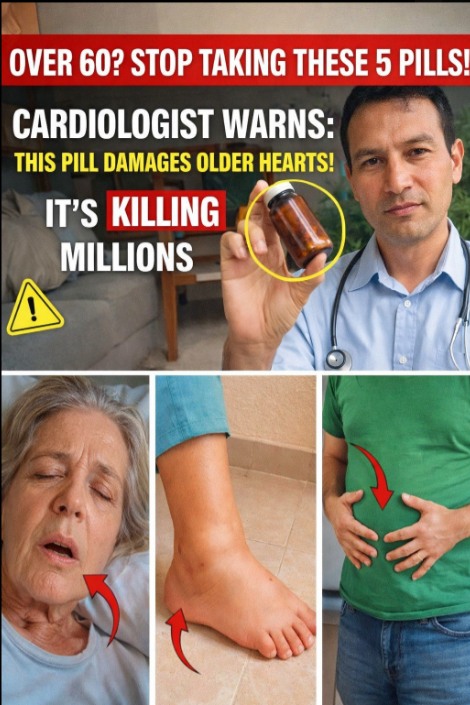
That headline is fear-based and misleading. There isn’t one secret pill that’s “damaging seniors’ hearts” across the board. What cardiologists actually warn about is how certain medications are used, especially in older adults.
Here’s the real picture:
💊 Medications that can affect the heart (in some cases)
🩹 Painkillers (NSAIDs)
Examples: Ibuprofen, Diclofenac
- Can raise blood pressure
- May increase risk of heart problems with long-term or high-dose use
🤧 Cold & flu decongestants
- Can increase heart rate and blood pressure
- Risky for people with existing heart conditions
💊 Some older diabetes medications
- A few can cause fluid retention → stress on the heart
❤️ Even heart medications (if misused)
Example: Metoprolol
- Very beneficial when used correctly
- But wrong dose or sudden stopping can cause issues
🧠 Why older adults need extra caution
- Body processes drugs more slowly
- More likely to take multiple medications (interactions)
- Higher chance of underlying heart conditions
❌ What the viral claim gets wrong
- Suggests a single hidden danger pill
- Implies doctors are hiding information
- Ignores that most risks depend on dose, duration, and individual health
🛡️ What actually keeps seniors safe
- Regular medication review with a doctor
- Avoiding long-term self-medication
- Monitoring blood pressure and heart health
- Never stopping prescribed meds suddenly
🧾 Bottom line
Some common medicines can affect the heart in older adults—but there’s no one “danger pill.” The real issue is safe, supervised use, not avoiding medications out of fear.
If you have a specific pill in mind, I can give you a clear, no-hype explanation of its risks and benefits.
