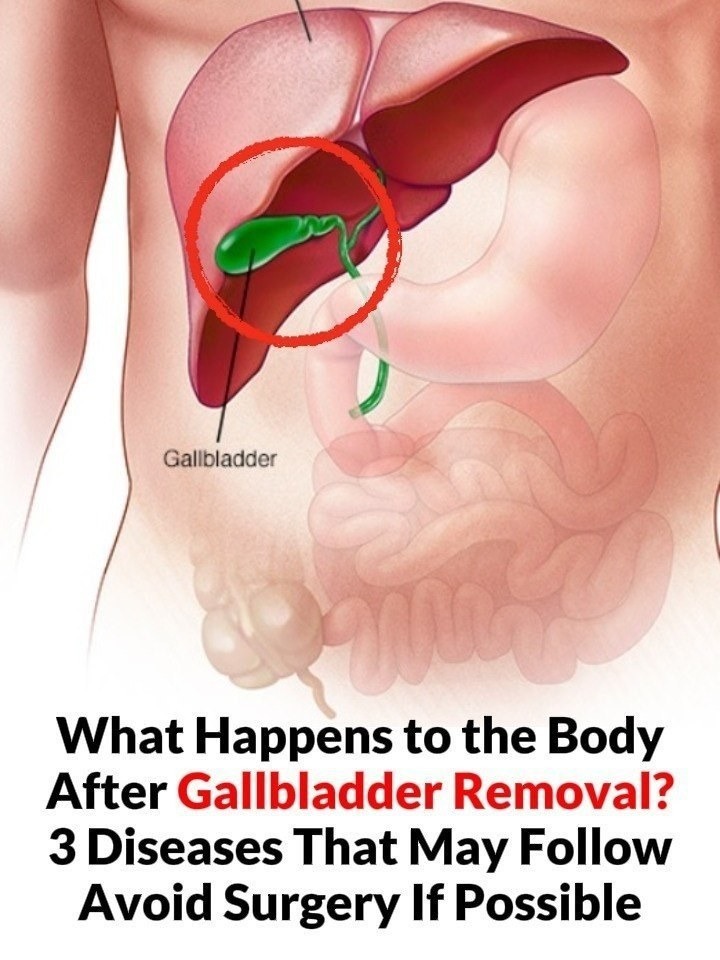
That headline is misleading. It takes real (but usually mild) after-effects and turns them into a reason to “avoid surgery,” which isn’t how medicine works. For many people, gallbladder removal—Cholecystectomy—is safe and the best option when symptoms are significant.
🧠 What actually changes after surgery
The gallbladder stores bile. After it’s removed, bile flows continuously into the intestine instead of being released in bursts. Most people adapt without issues.
⚠️ Possible conditions or symptoms afterward
1. Digestive changes (especially diarrhea)
- Loose stools, particularly after fatty meals
- Usually temporary and improves over time
2. Bile reflux / stomach irritation
- Can cause burning or discomfort similar to acid reflux
👉 Not very common and often manageable
3. Post-cholecystectomy syndrome
- Ongoing bloating, pain, or indigestion
- Sometimes due to other underlying problems, not the surgery itself
❗ Important reality check
- Most people feel better after surgery (pain from gallstones is gone)
- Serious long-term complications are uncommon
- Many live completely normal lives without a gallbladder
❌ What the viral claim gets wrong
- Makes complications sound inevitable
- Ignores benefits of surgery
- Suggests avoiding it even when it’s medically necessary
👉 Untreated gallbladder problems can lead to:
- Severe pain attacks
- Infection
- Pancreatitis (which can be dangerous)
🛠️ How to reduce problems after surgery
- Start with smaller, low-fat meals
- Gradually reintroduce foods
- Stay active
- Follow your doctor’s advice
🧾 Bottom line
Gallbladder removal has possible side effects, but it’s generally safe and often the right treatment when needed. The decision shouldn’t be based on viral warnings—it should be based on your actual condition.
If you’re considering surgery, tell me your symptoms—I can help you weigh when it’s necessary vs when you might try other options.
