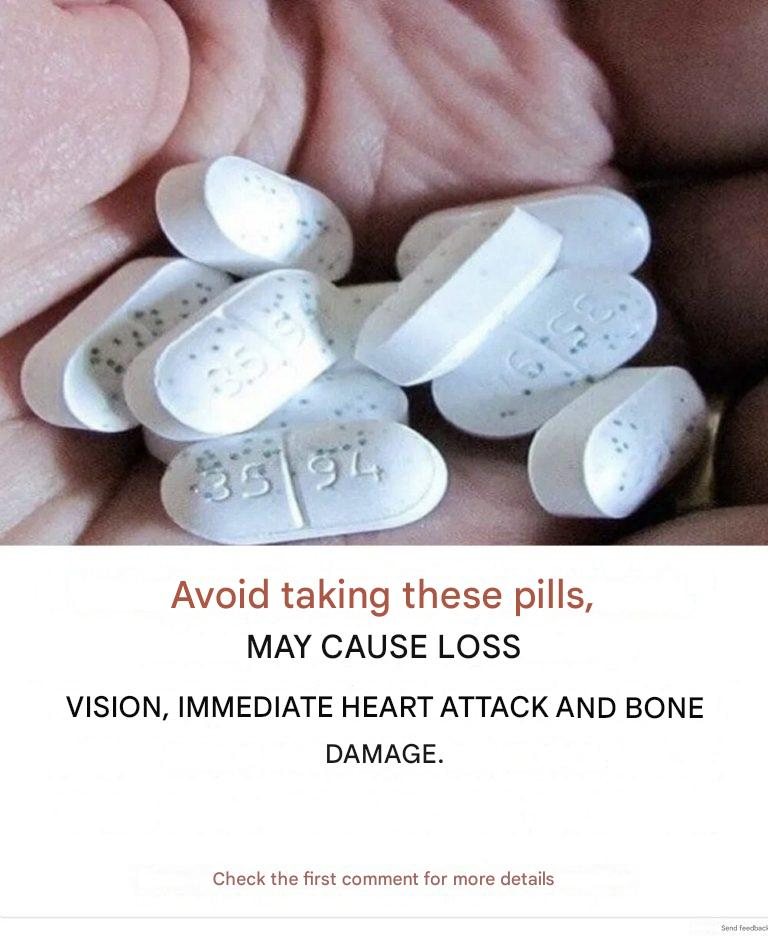
That kind of headline is designed to alarm you. It’s not wrong that some medications can increase the risk of blood clots or heart problems—but it’s very misleading without context.
Here’s the reality:
⚠️ Yes, some medicines can increase clot risk
Certain drugs are known to slightly raise the chance of Blood clots or even a Heart attack, but usually:
- The risk is small
- It depends on your age, health, and dose
- Doctors prescribe them because benefits outweigh risks
💊 Common categories often mentioned in these warnings
1. Hormonal medications
(e.g., birth control pills, hormone therapy)
- Can increase clot risk, especially in smokers or older adults
2. Painkillers (NSAIDs)
- Some drugs like Ibuprofen or Diclofenac may slightly increase heart risk if used long-term or in high doses
3. Certain heart or cancer medications
- Some treatments affect how blood clots, either increasing or decreasing risk
🚫 What these viral warnings get wrong
- They act like the danger is immediate and unavoidable
- They don’t mention who is actually at risk
- They ignore that stopping medication suddenly can be more dangerous
🧠 What really matters for clot risk
Your personal risk depends more on:
- Age (risk rises after 60–70)
- Long periods of inactivity
- Smoking
- Obesity
- Conditions like high blood pressure or diabetes
- Heart rhythm issues like Atrial fibrillation
✔️ Practical advice
- Don’t stop any prescribed medication without a doctor’s advice
- Ask your doctor or pharmacist: “Does this medicine increase clot risk for me?”
- Watch for real warning signs:
- Sudden leg swelling or pain
- Chest pain or shortness of breath
- Sudden weakness or speech trouble
These need urgent medical attention
🧾 Bottom line
Some tablets can increase clot or heart risk—but blanket warnings like this are oversimplified and often fear-based. The real question is not “Is this drug dangerous?” but “Is it safe for me, given my health?”
If you tell me the specific medication you’re referring to, I can give you a much clearer, personalized explanation.
