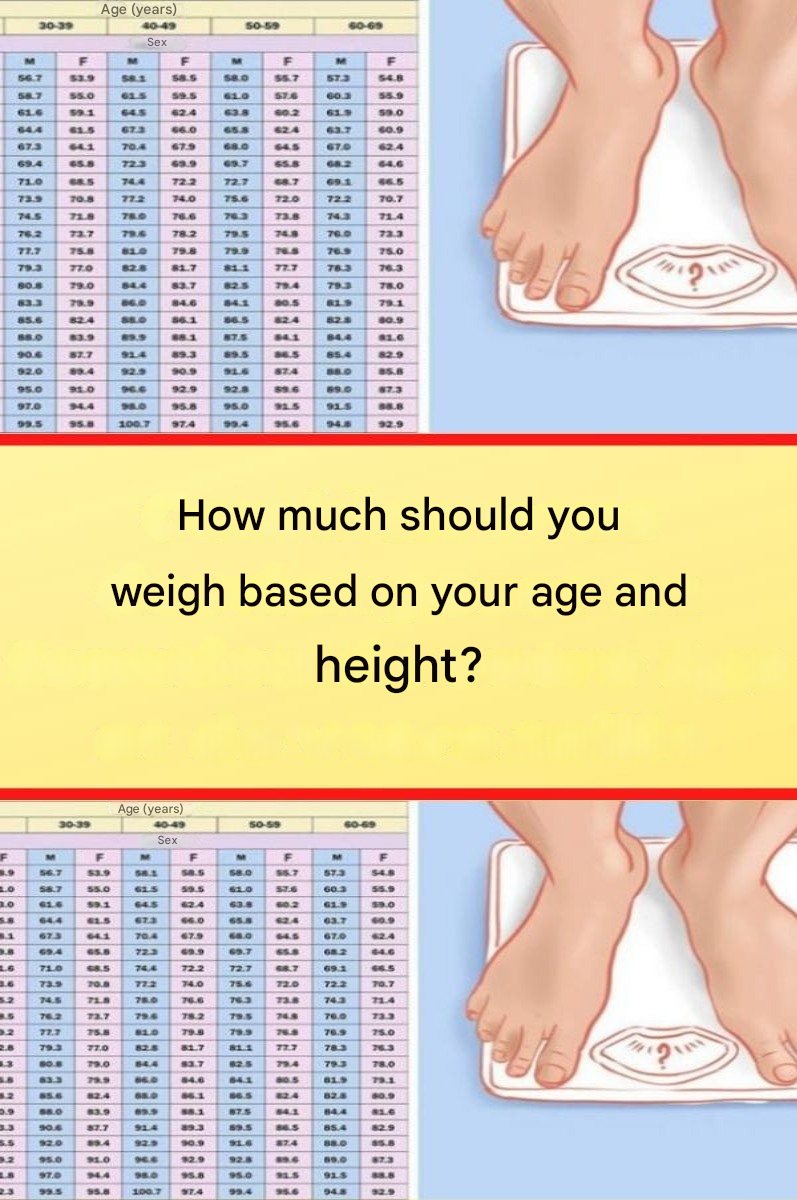
There isn’t a single “correct” weight based only on age and height. Doctors usually estimate a healthy range using Body mass index, which relates your weight to your height.
⚖️ The basic idea (BMI)
BMI = \frac{\text{weight (kg)}}{\text{height (m)}^2}
📊 BMI categories for adults
- Underweight: below 18.5
- Normal weight: 18.5 – 24.9
- Overweight: 25 – 29.9
- Obesity: 30 or higher
📏 Example healthy weight ranges
Height: 5’4″ (163 cm)
- Healthy range: ~50–66 kg
Height: 5’7″ (170 cm)
- Healthy range: ~55–72 kg
Height: 5’10” (178 cm)
- Healthy range: ~63–80 kg
(These are approximate ranges based on BMI 18.5–24.9)
👴 Does age change this?
- With age, body composition changes (less muscle, more fat)
- Some doctors allow slightly higher weight in older adults for strength and energy
- But the general BMI ranges still apply as a guide
🧠 Important reality check
BMI is useful—but not perfect. It doesn’t account for:
- Muscle mass
- Body fat distribution
- Bone structure
That’s why two people with the same BMI can look very different.
✔️ What matters more than a number
- Waist size (belly fat is more risky)
- Physical strength and mobility
- Blood pressure, sugar, and cholesterol
🧾 Bottom line
A healthy weight depends mostly on height, not age, and is best estimated using BMI—but your overall health matters more than hitting an exact number.
If you tell me your height and current weight, I can calculate your BMI and give you a more personalized healthy range.
