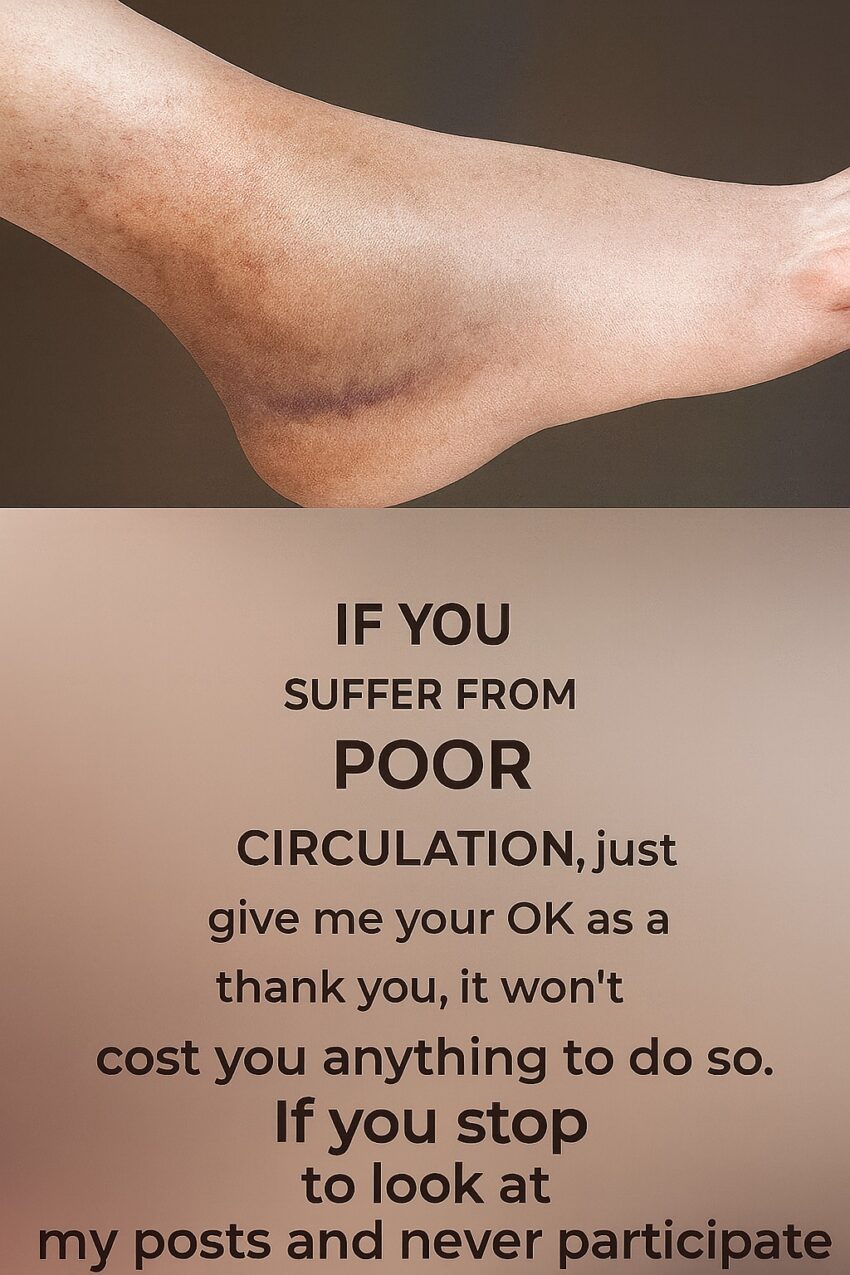
That headline is oversimplified. There isn’t one single “solution” for poor circulation—but there are effective ways to improve symptoms, depending on the cause.
🦵 What “poor circulation” can feel like
It’s often linked to Peripheral artery disease or vein problems. Common symptoms include:
- Cold feet or legs
- Tingling or numbness
- Leg pain when walking (that improves with rest)
- Swelling in ankles
- Skin color changes
✔️ What actually helps improve circulation
🚶 1. Regular walking (most effective)
- Even 20–30 minutes daily can improve blood flow
- Especially helpful for leg pain from circulation issues
🦶 2. Leg elevation
- Raise legs above heart level for 15–20 minutes
- Helps reduce swelling and improves venous return
🧦 3. Compression stockings
- Support veins and reduce swelling
- Often recommended for circulation and varicose veins
🚭 4. Stop smoking (if applicable)
- Smoking severely damages blood vessels
🥗 5. Manage underlying conditions
Poor circulation is often tied to:
- Diabetes
- Hypertension
- High cholesterol
👉 Controlling these is crucial
💧 6. Stay hydrated & keep moving
- Avoid long periods of sitting or standing
- Simple ankle movements help circulation
⚠️ When it’s serious
See a doctor if you have:
- Severe leg pain when walking
- Wounds that don’t heal
- Sudden swelling in one leg (possible clot)
🧠 Reality check
- No drink, supplement, or “quick fix” will cure circulation problems
- Real improvement comes from consistent habits and medical care if needed
✔️ Bottom line
If your legs feel heavy, numb, or painful, the “solution” isn’t one trick—it’s movement, lifestyle changes, and treating the root cause.
If you want, describe your exact symptoms (pain, swelling, numbness, etc.), and I can help you narrow down the likely cause and best approach.
