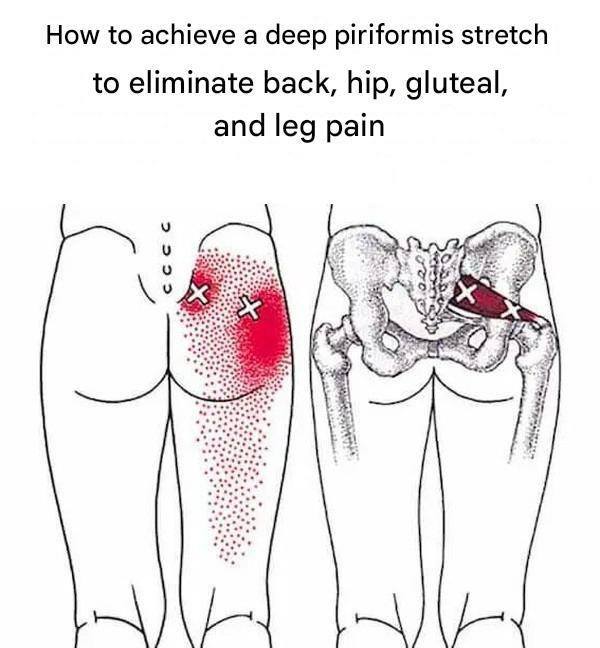
A “deep piriformis stretch” can help relieve tightness in the hip and buttock area—but it’s not a guaranteed cure for all back or leg pain. It’s most useful when the Piriformis syndrome is involved.
Here’s how to do it safely and effectively 👇
🧘♂️ 1. Lying (Figure-4) stretch — beginner-friendly
- Lie on your back
- Cross one ankle over the opposite knee (forming a “4”)
- Grab the back of your thigh
- Gently pull it toward your chest
👉 You should feel a stretch in the glute/hip of the crossed leg
Hold: 20–30 seconds
Repeat: 2–3 times per side
🪑 2. Seated piriformis stretch
- Sit upright on a chair
- Place one ankle over the opposite knee
- Lean forward slowly (keep your back straight)
👉 Deep stretch in the buttock area
🛏️ 3. Knee-to-opposite-shoulder stretch (deeper)
- Lie on your back
- Pull one knee toward the opposite shoulder
- Keep hips flat on the floor
👉 Targets the piriformis more directly
⚠️ Important tips
- Stretch should feel firm but not painful
- Breathe slowly—don’t bounce
- Warm up slightly before stretching
🚨 When to be careful
- Sharp or shooting pain down the leg
- Numbness or weakness
👉 Could involve the sciatic nerve—get checked
🧠 Reality check
- Stretching helps muscle tightness
- But pain can also come from:
- Spine issues
- Disc problems
- Nerve compression
✔️ Bottom line
Piriformis stretches can reduce hip and glute pain and improve mobility, especially when done regularly—but they’re part of a broader approach, not a one-step fix.
If you want, I can give you a full 5-minute daily routine to relieve sciatica and hip pain.
