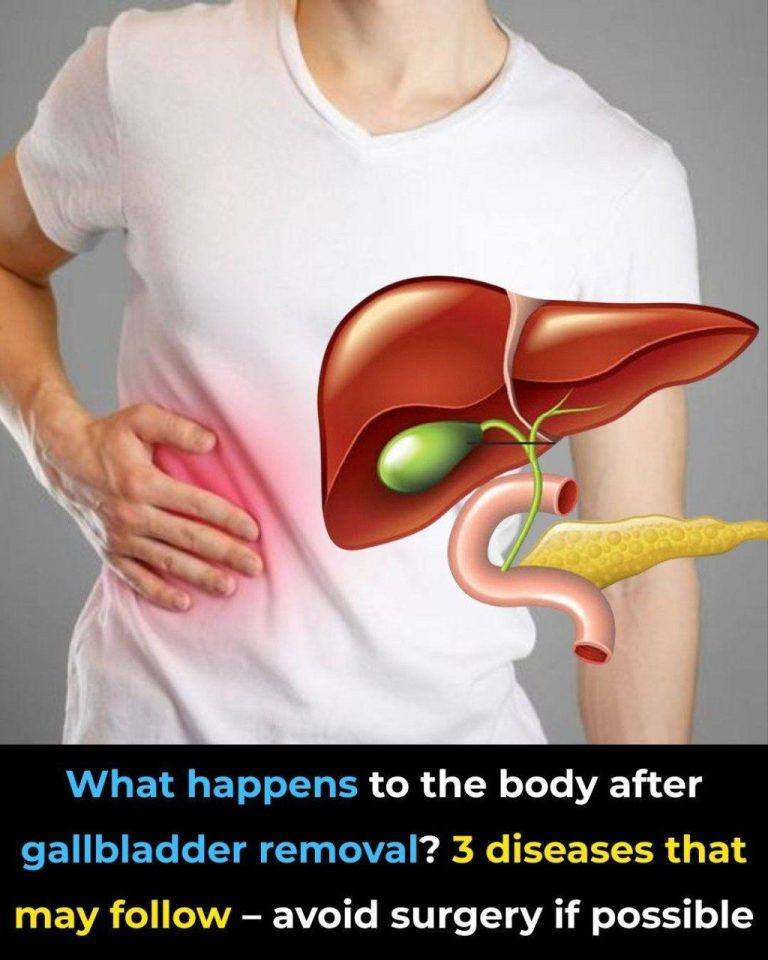
That headline is misleading and a bit fear-based.
Cholecystectomy is a very common and generally safe operation. It’s not something doctors recommend lightly—but when it’s needed, avoiding it can be more dangerous than having it.
🧠 What the gallbladder does
The Gallbladder stores bile that helps digest fats.
After removal, bile flows directly from the liver into the intestine.
🔄 What changes after surgery
✔️ Most people:
- Digest food normally
- Live completely healthy lives
⚠️ Some temporary effects:
- Mild diarrhea or loose stools
- Bloating after fatty meals
- These usually improve over weeks to months
⚠️ Possible longer-term issues (not guaranteed)
1. Digestive sensitivity
- Some people have trouble with high-fat meals
2. Bile reflux (less common)
- Can cause stomach discomfort or heartburn
3. Post-cholecystectomy symptoms
- Ongoing abdominal discomfort in a small number of people
🚫 About “3 diseases that follow”
Viral posts often exaggerate and link surgery to conditions like:
- Gastroesophageal reflux disease
- Irritable bowel syndrome
- Liver or digestive issues
👉 These are not guaranteed outcomes and may not be caused by the surgery itself.
⚠️ When surgery is actually necessary
- Painful gallstones
- Infection or inflammation
- Blocked bile ducts
👉 In these cases, not having surgery can lead to serious complications
🧠 Can it be avoided?
- Sometimes, with mild symptoms: diet changes, weight management
- But once complications start, surgery is often the definitive treatment
✅ Bottom line
Gallbladder removal doesn’t “cause diseases” in most people. It’s usually safe and effective, and for many, it prevents more serious problems.
If you’re considering this surgery or have symptoms, tell me what’s going on—I can help you understand whether surgery is likely necessary in your case.
