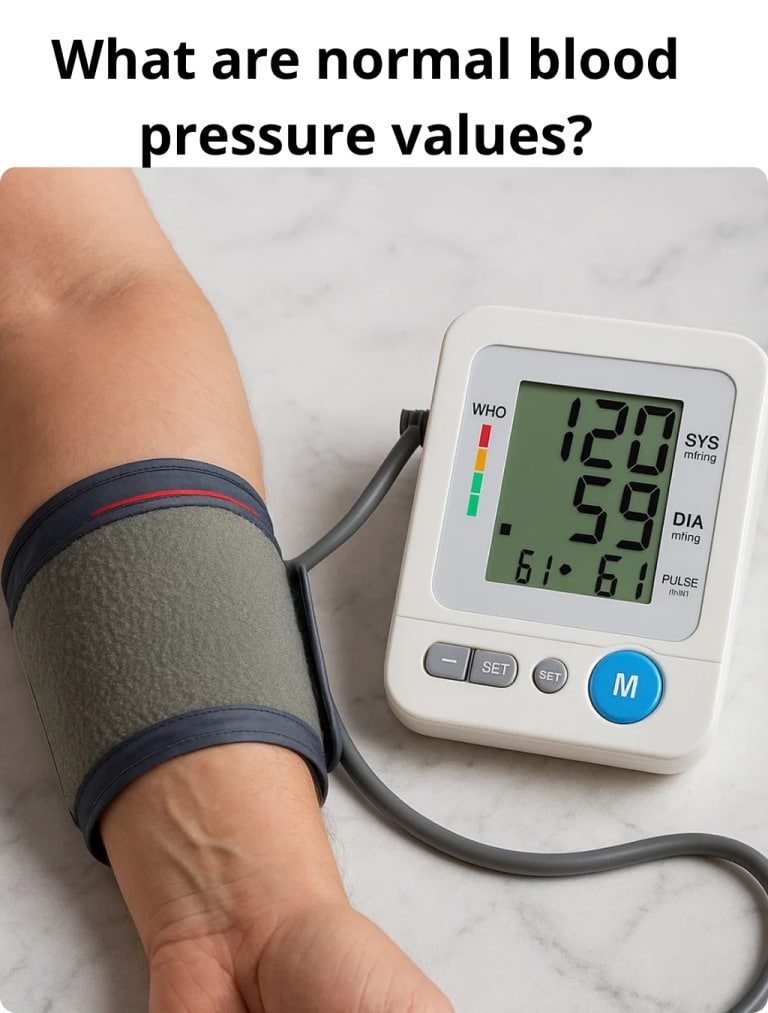
That headline is misleading—there isn’t a different “normal” blood pressure for each age group. The target is mostly the same for adults, with small adjustments based on health and frailty.
🩺 Standard reference for adults
Blood pressure is measured as systolic/diastolic (top/bottom number).
📊 General categories
- Normal: below 120 / 80
- Elevated: 120–129 / below 80
- High (Hypertension): 130 / 80 or higher → Hypertension
🧠 Why age matters (a bit)
As people get older:
- Arteries become stiffer
- Systolic (top number) may rise slightly
👉 But that doesn’t mean “high is normal”—it just becomes more common, not ideal.
👶 Children & teens
- Normal ranges vary by age, height, and sex
- Doctors use growth charts rather than a single number
👵 Older adults (60+)
- Many guidelines still aim for under 130/80 if tolerated
- Sometimes a slightly higher target is accepted if:
- There’s dizziness
- Risk of falls
- Multiple health conditions
🚩 When to be concerned
- Consistent readings ≥130/80
- Symptoms like headache, dizziness, chest pain
🧠 Common mistake people make
- Thinking higher blood pressure is “normal with age” ❌
- Ignoring readings until symptoms appear ❌
✅ What actually matters
- Consistent readings over time
- Overall health, not just one number
- Proper measurement (rested, seated, correct cuff size)
🧾 Bottom line
There’s no special “normal for each age”—for most adults, around 120/80 is ideal, and 130/80+ is considered high, regardless of age.
If you want, tell me your readings—I can help you interpret whether they’re in a safe range.
