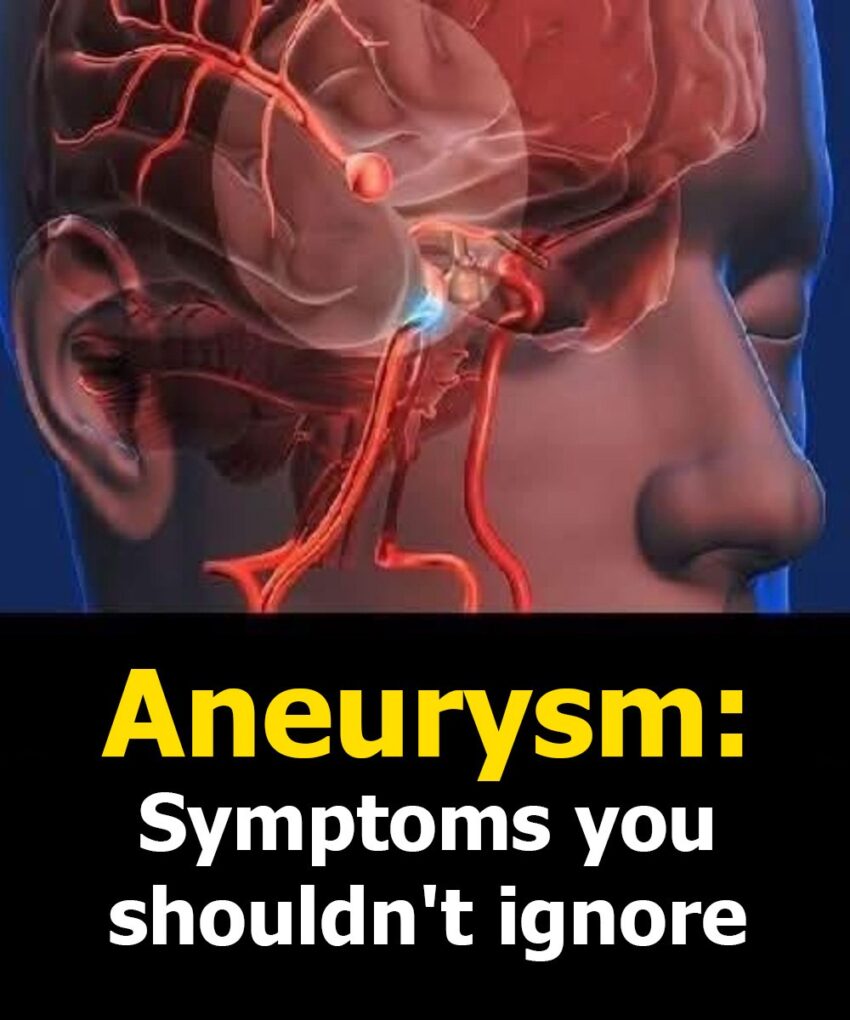
An Aneurysm can be silent for years, but when it causes symptoms—especially if it ruptures—it becomes life-threatening very quickly. The tricky part is that signs depend on where it occurs.
🧠 Common types
- Brain aneurysm
- Abdominal aortic aneurysm
🚨 Emergency signs (possible rupture)
These need immediate medical attention:
🧠 Brain-related
- Sudden, severe headache (“worst headache of your life”)
- Nausea or vomiting
- Stiff neck
- Sensitivity to light
- Loss of consciousness
❤️ Abdominal or chest-related
- Sudden severe chest, back, or abdominal pain
- Pain that spreads to the back or legs
- Dizziness or fainting
- Rapid heartbeat
⚠️ Possible warning signs (before rupture)
For brain aneurysm
- Vision problems (double or blurred)
- Pain behind or around the eye
- Drooping eyelid
- Numbness or weakness on one side of the face
For abdominal aneurysm
- Deep, steady pain in the abdomen
- Pulsating feeling near the navel
🧠 Important reality
- Many aneurysms cause no symptoms at all until they rupture
- Risk increases with:
- Smoking
- Hypertension
- Age and family history
🚩 When to act immediately
- Any sudden severe headache
- Sudden intense chest or abdominal pain
- Fainting or neurological symptoms
👉 Don’t wait—this is an emergency
✅ Bottom line
Aneurysm symptoms are often sudden and severe, not subtle lists of “10 signs.” Knowing the red flags and acting fast is what saves lives.
If you want, I can explain your personal risk factors or how aneurysms are screened and prevented.
