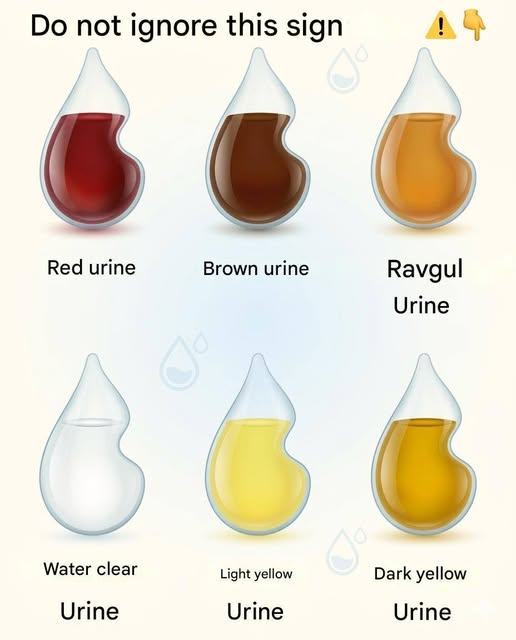
Urine color can give useful clues about hydration and, sometimes, health—but it’s not a diagnosis on its own. Here’s a practical guide to what different colors may mean:
💧 Pale yellow to light straw
What it means: Well hydrated
- This is the ideal, healthy range
🚿 Clear (almost colorless)
What it means: Very hydrated
- Not dangerous, but you might be drinking more water than needed
🌼 Dark yellow
What it means: Mild dehydration
- Common after sweating or not drinking enough fluids
🍯 Amber or honey
What it means: Dehydration
- Time to drink water soon
🍊 Orange
Possible causes:
- Dehydration
- Certain vitamins (like B-complex)
- Some medications
- Rarely, liver or bile issues
🌸 Pink or red
Possible causes:
- Foods (beets, berries)
- Blood in urine (can be serious)
- Urinary tract issues
👉 If it’s not from food, get it checked—especially with pain
🍵 Brown or cola-colored
Possible causes:
- Severe dehydration
- Liver problems
- Muscle breakdown
👉 Needs medical attention if it persists
🧪 Cloudy or milky
Possible causes:
- Urinary tract infection
- Kidney stones
- Excess minerals
🟢 Blue or green (rare)
Possible causes:
- Food dyes
- Certain medications
- Rare infections
⚠️ When to see a doctor
- Red/pink urine without clear food cause
- Dark brown urine that doesn’t improve with hydration
- Pain, burning, fever, or strong odor
- Persistent unusual color for more than a day or two
✔️ Simple rule
- Light yellow = good
- Darker = drink more water
- Unusual colors = pay attention
If you want, you can describe what you’re seeing and I’ll help you interpret it more specifically.
