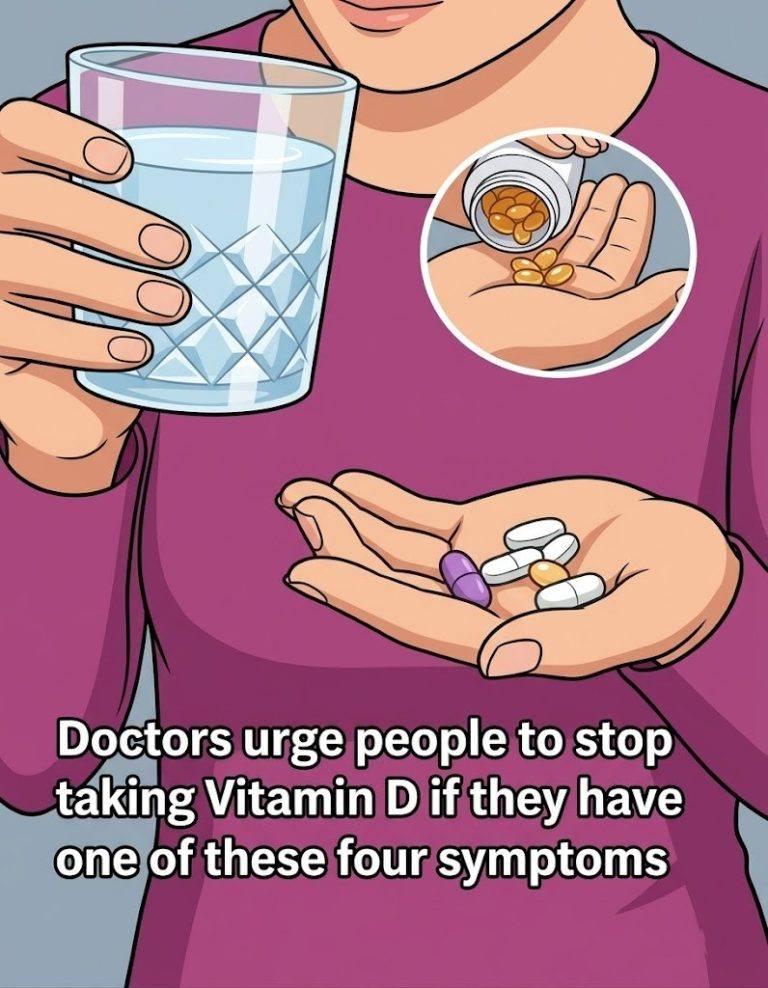
That headline is alarmist. You don’t need to “stop vitamin D immediately” for vague reasons—but there are specific symptoms that can signal too much vitamin D, usually from high-dose supplements (not normal sun exposure or diet).
The real issue is vitamin D toxicity, which raises calcium levels in the blood (hypercalcemia).
⚠️ 4 symptoms that should raise concern
1. Persistent nausea, vomiting, or loss of appetite
- Early signs of excess calcium
- Often mistaken for a stomach issue
2. Excessive thirst and frequent urination
- High calcium makes your kidneys work harder
- You may feel constantly dehydrated
3. Weakness, fatigue, or confusion
- Can affect brain and muscle function
- In severe cases, mental changes can occur
4. Kidney-related pain or problems
- Risk of kidney stones or damage
- May involve back/side pain or abnormal lab results
🧠 What’s actually happening
Too much vitamin D → increases calcium absorption → calcium builds up in blood → affects organs.
🚫 Important reality check
- This is rare and almost always due to very high supplement doses over time
- Normal doses (as prescribed) are generally safe
- Sunlight does NOT cause toxicity
🟡 Who should be extra careful
- People taking high-dose supplements without testing
- Those with kidney disease
- People on certain medications
🟢 What to do if you notice these symptoms
- Don’t panic—but pause supplements and contact a doctor
- A simple blood test can check vitamin D and calcium levels
Bottom line
Vitamin D is important for bones and immunity—but like many things, too much can be harmful. The goal isn’t to avoid it, but to use the right dose based on your needs.
If you want, tell me your dose and why you’re taking vitamin D—I can help you figure out if it’s in a safe range.
