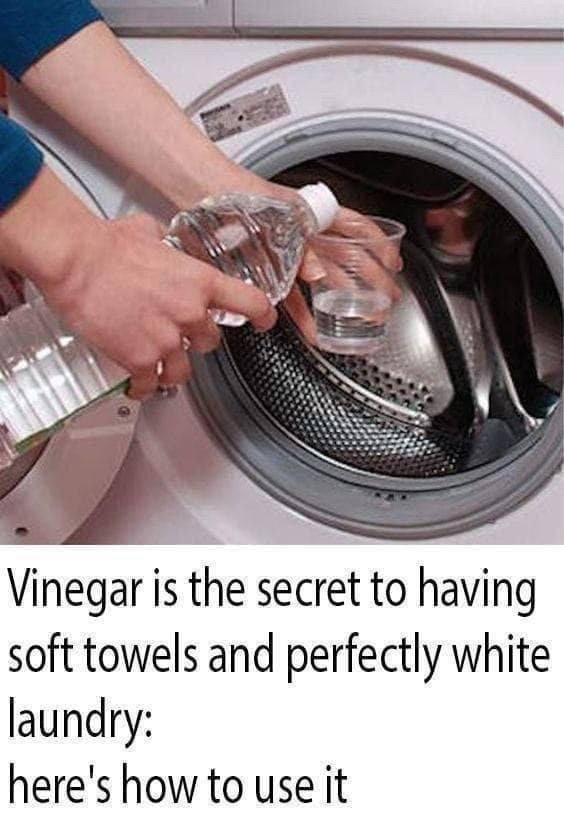
Vinegar really can help with laundry—but the “magic” comes from using it in the right place and amount, not dumping it in with everything.
🧼 Why vinegar works
- acetic acid breaks down detergent residue
- Neutralizes odors
- Softens fabric by removing mineral buildup (hard water)
✅ The right way to use it
🧺 For softer towels
- Add ½ to 1 cup white vinegar to the fabric softener compartment
- Run your wash as usual
👉 This removes buildup that makes towels stiff.
👕 For whiter whites
- Add ½ cup vinegar during the rinse cycle
- Or pre-soak whites in warm water + 1 cup vinegar for 30–60 minutes
👉 Helps brighten by dissolving dulling residues (not a bleach substitute).
👃 For odor removal
- Add ½–1 cup vinegar in the rinse cycle
- Works well for gym clothes, socks, and musty fabrics
⚠️ What most people do wrong
- ❌ Adding vinegar with detergent → reduces effectiveness
- ❌ Using too much → lingering smell or fabric wear over time
- ❌ Using on delicate materials without testing
🚫 Important warnings
- Never mix vinegar with bleach (dangerous fumes)
- Avoid frequent use on rubber seals (washing machines)
- Not ideal for some specialty fabrics (like silk)
🟡 Reality check
Vinegar brightens and softens, but it won’t:
- Replace bleach for heavy stains
- Make badly worn towels “like new”
🟢 Bottom line
Use vinegar in the rinse cycle, not with detergent, and in moderate amounts—that’s the real trick behind softer towels and fresher, brighter laundry.
If you want, tell me your washing machine type (front-load/top-load), and I’ll give you exact measurements and settings.
