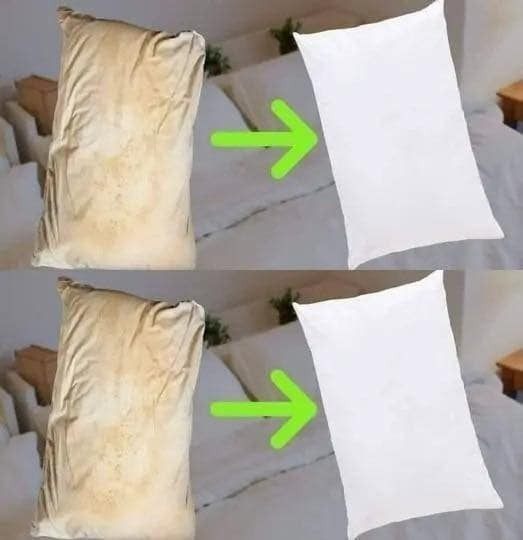
That’s a useful goal—but a lot of “miracle pillow cleaning” tips online overpromise. You can get pillows much cleaner and fresher, but the right method depends on what they’re made of.
Step 1: Check the label first
Look for care instructions. Most cotton, polyester, or down/feather pillows are washable. Memory foam or latex usually are not machine washable.
🧼 For machine-washable pillows (most common)
What you’ll need:
- Mild laundry detergent
- Optional: baking soda + white vinegar
How to wash:
- Put 2 pillows in the washing machine (balances the drum).
- Use warm water on a gentle cycle.
- Add a small amount of detergent (too much leaves residue).
- Optional whitening boost:
- Add ½ cup baking soda with detergent
- Add 1 cup white vinegar during rinse cycle
Extra rinse:
Run an extra rinse to remove all soap—this helps avoid stiffness or odors.
☀️ Drying properly (very important)
- Use low heat in the dryer.
- Add clean tennis balls or dryer balls to fluff them.
- Make sure pillows are completely dry (this can take a while).
- Damp pillows can develop mold or smell worse.
🧽 For memory foam or non-washable pillows
- Don’t soak them.
- Spot clean with a cloth, mild detergent, and water.
- Sprinkle baking soda, leave for a few hours, then vacuum to remove odors.
✨ Keeping pillows fresh longer
- Use pillow protectors + pillowcases
- Wash every 3–6 months
- Air them out in sunlight occasionally
⚠️ Reality check
- Deep yellow stains from sweat/oils may fade, but not always become perfectly white again.
- If a pillow is very old or lumpy, cleaning won’t restore it fully—it might be time to replace it.
If you tell me what kind of pillow you have, I can give a more tailored method.
