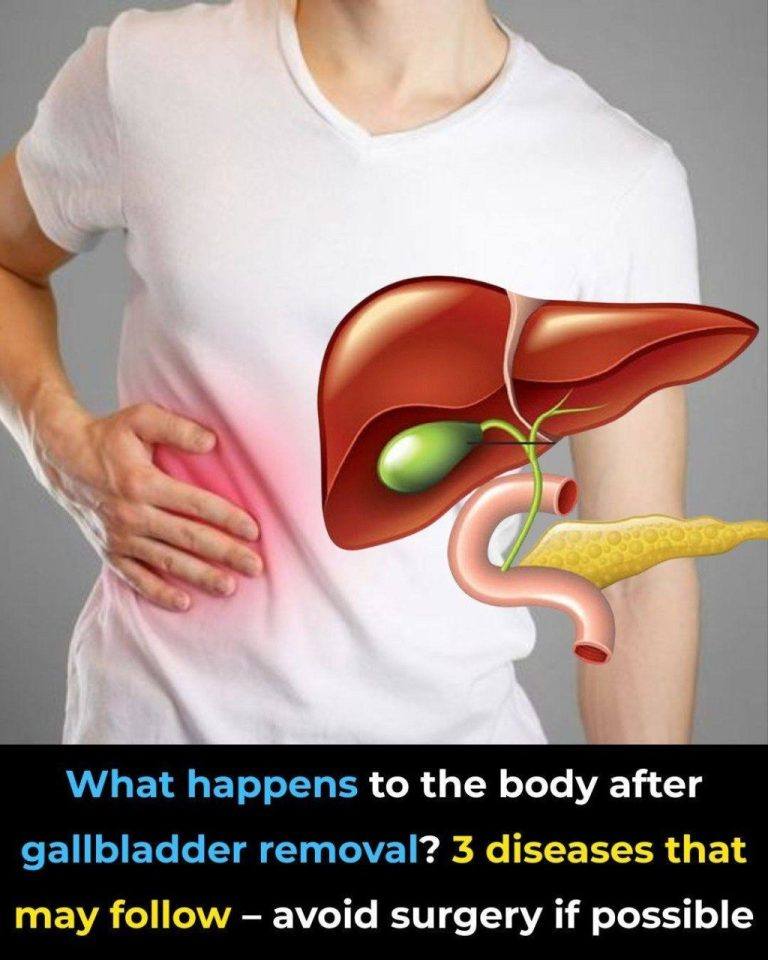
That headline is again designed to sound scary. The truth is more balanced: most people live normally after gallbladder removal (cholecystectomy), but a minority can develop certain digestive changes or related conditions.
What actually happens after gallbladder removal
Your gallbladder stores bile (a digestive fluid). After removal:
- Bile flows continuously from the liver into the intestine
- It’s no longer stored and released in “bursts” after fatty meals
This can change digestion, especially for fats.
Possible issues some people develop
1. Post-cholecystectomy diarrhea
- Loose stools, especially after fatty food
- Happens because bile flows more continuously into the gut
- Usually temporary, sometimes managed with diet or medication
2. Bile reflux gastritis
- Bile flows backward into the stomach
- Can cause burning pain, nausea, or indigestion
- Not common, but more likely in sensitive individuals
3. Ongoing digestive discomfort (functional symptoms)
- Bloating, gas, or food intolerance
- Often overlaps with IBS-like symptoms
- Usually manageable with dietary adjustments
Important correction to the headline
The idea “avoid surgery if possible” is misleading.
Gallbladder removal is usually done for:
- Painful gallstones
- Infection (cholecystitis)
- Blockage of bile ducts
If untreated, these conditions can become dangerous or life-threatening (infection, pancreatitis, severe inflammation).
The real takeaway
- Most people do NOT develop serious long-term disease
- A small group has digestive side effects, usually manageable
- Surgery is recommended when benefits outweigh risks—not as a casual choice
If you want, I can explain:
- what foods help after gallbladder removal
- or which symptoms after surgery actually need medical attention
