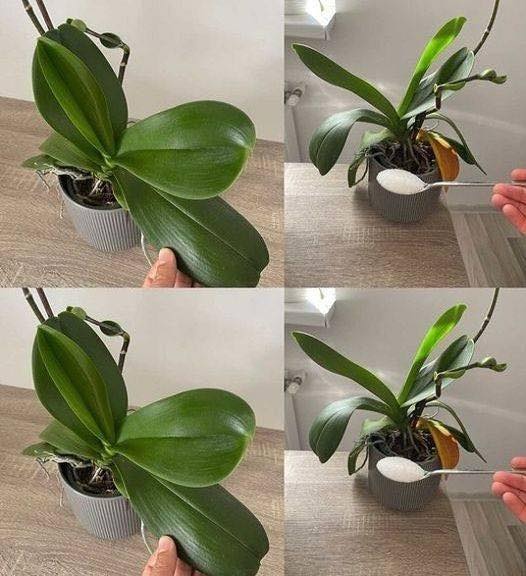
That headline is almost certainly clickbait gardening advice, not a reliable “miracle fertilizer.”
Orchids can bloom beautifully, but not because of a single tablespoon of anything. They respond to consistent care + balanced nutrition, not quick tricks.
🌸 What orchids actually need to bloom
Most common orchids (like Phalaenopsis) bloom when they get:
- Bright, indirect light
- Proper watering (not overwatering)
- A slight temperature drop at night (helps trigger flowering)
- Regular, diluted fertilizer during growth
🧪 About the “1 tablespoon” claim
These posts usually refer to things like:
- Rice water
- Milk
- Banana water
- Epsom salt (magnesium sulfate)
- Sugar water
Reality:
- There is no single tablespoon formula that guarantees nonstop blooming
- Too much of these can actually:
- cause root rot
- attract fungus or bacteria
- disrupt the orchid’s nutrient balance
🌱 What actually works (safe approach)
If you want healthy blooms:
✔️ Fertilizer
- Use a balanced orchid fertilizer (e.g., 20-20-20 or 10-10-10)
- Dilute to ¼ strength
- Apply every 2–4 weeks during active growth
✔️ Natural boost (safe option)
- Very diluted Epsom salt (magnesium) occasionally can help leaf color and strength
→ but not “non-stop flowering”
✔️ Bloom trigger
- Slight nighttime temperature drop (about 5–10°C difference) often matters more than fertilizer tricks
🚫 What to avoid
- Dumping kitchen leftovers directly into the pot
- Heavy “DIY fertilizer cocktails”
- Overfeeding (orchids are light feeders)
🌼 Bottom line
The “1 tablespoon = endless blooms” claim is not scientifically reliable. Orchids bloom from stable care over time, not a single ingredient.
If you want, tell me what orchid you have (or share a photo), and I can give you a simple care plan to actually get it to rebloom.
