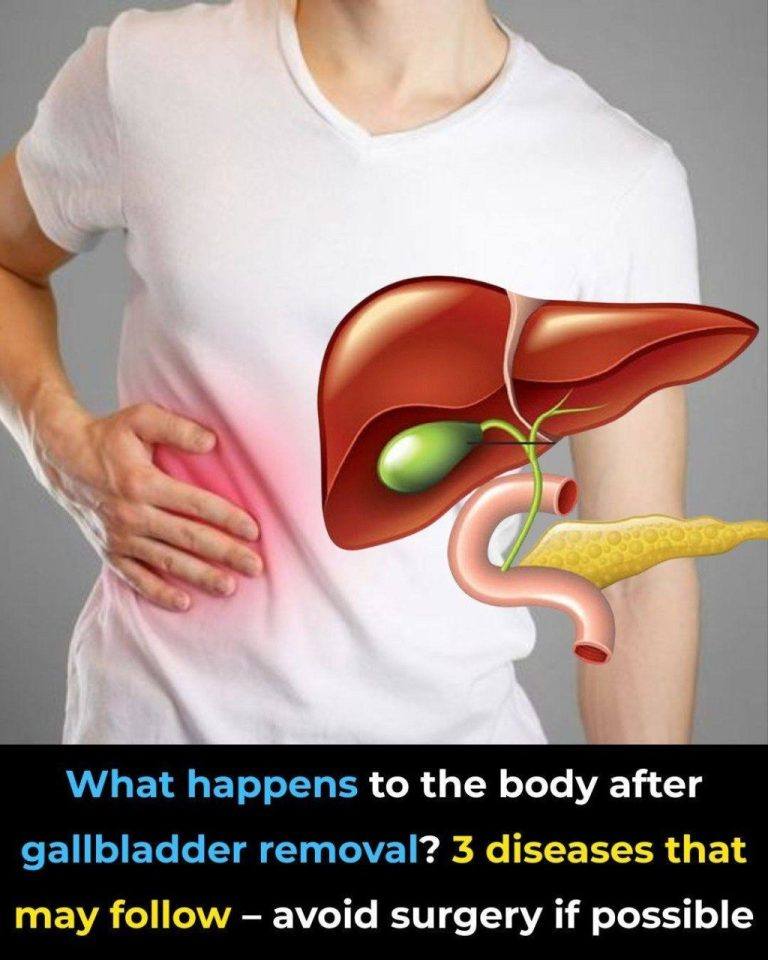
That headline is fear-based and misleading. Gallbladder removal (cholecystectomy) is a very common, well-studied surgery, and for most people it prevents serious complications rather than causing disease.
Let’s separate fact from exaggeration.
🧠 What actually changes after gallbladder removal
The gallbladder stores bile and releases it when you eat fatty food. After removal:
- bile flows continuously from the liver into the intestine
- there is no “storage tank” for bile anymore
Most people adapt well.
⚠️ Possible issues after surgery (not “3 diseases”)
1) Post-cholecystectomy diarrhea
- Loose stools, especially after fatty meals
- Caused by continuous bile flow
- Often improves over time or with diet changes
2) Bile reflux or gastritis (less common)
- Bile may irritate the stomach
- Symptoms: burning, nausea, indigestion
- Treatable with medication in most cases
3) Functional digestive symptoms
- Bloating, gas, food sensitivity
- Sometimes overlaps with IBS-like symptoms
- Usually manageable with diet adjustments
🚫 What the headline gets wrong
There are no specific “3 diseases that follow gallbladder removal” as a rule.
Large studies show:
- Most people live normally after surgery
- Serious long-term complications are uncommon
- The body compensates for the missing gallbladder
⚖️ Why surgery is usually recommended (important)
Gallbladder surgery is done because untreated gallstones or inflammation can cause:
- severe infection
- pancreatitis (can be life-threatening)
- bile duct blockage
- emergency hospitalization
👉 In many cases, the risk of not operating is higher than operating
🧠 Bottom line
Gallbladder removal does not typically lead to new diseases. Some people experience digestive changes, but most adjust well and feel better than before surgery because the original problem is gone.
If you want, I can explain:
- what recovery feels like week-by-week
- or how to eat after gallbladder removal to avoid symptoms
