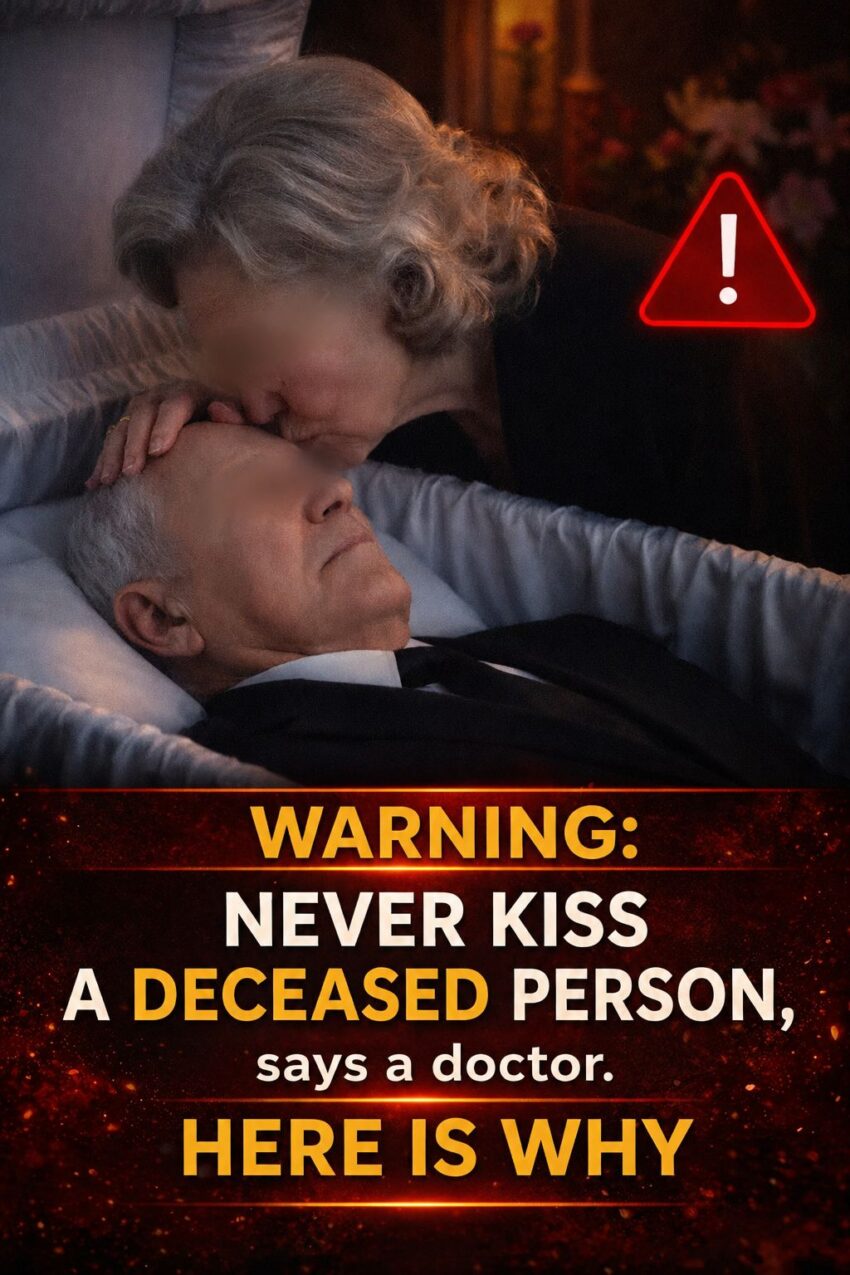
That’s a sensational, fear-based headline. There’s no medical rule that “never kiss a dead person,” but there are real health and safety considerations around contact with a deceased body, depending on the situation.
Here’s the factual breakdown:
🧠 What actually matters
🧬 1) Infection risk (usually low, but context-dependent)
- After death, most infectious diseases do not spread easily from a body that is being properly handled
- Risk is mainly relevant if the person died from certain contagious infections (e.g., tuberculosis, some viral hemorrhagic fevers)
👉 In normal hospital or natural deaths, the risk from brief contact is very low
🧫 2) Body changes after death
- The body begins natural decomposition processes
- Bacteria inside the body start breaking down tissues
- There may be odor or fluid changes over time
👉 This is unpleasant, but not usually dangerous in the short term
⚠️ 3) Special high-risk cases (rare)
Extra precautions are taken if death involved:
- Highly infectious diseases
- Severe untreated infections
- Certain public health conditions
In those cases, medical staff may restrict contact entirely.
❤️ Cultural and emotional side
- In many cultures, families do say goodbye through touch or a kiss
- Funeral practices are often guided by religious and emotional traditions, not medical danger
🚫 What the headline gets wrong
- It implies kissing a deceased person is inherently dangerous → ❌ not true in most cases
- It ignores medical context (cause of death, time since death, handling procedures)
- It uses fear instead of facts
🧠 Bottom line
Kissing or touching a deceased loved one is not automatically dangerous, but it should be done with awareness of:
- cause of death
- time since death
- hygiene and funeral preparation practices
If you want, I can also explain:
👉 what actually happens to the body in the first 24–72 hours after death (medically, not sensationally)
