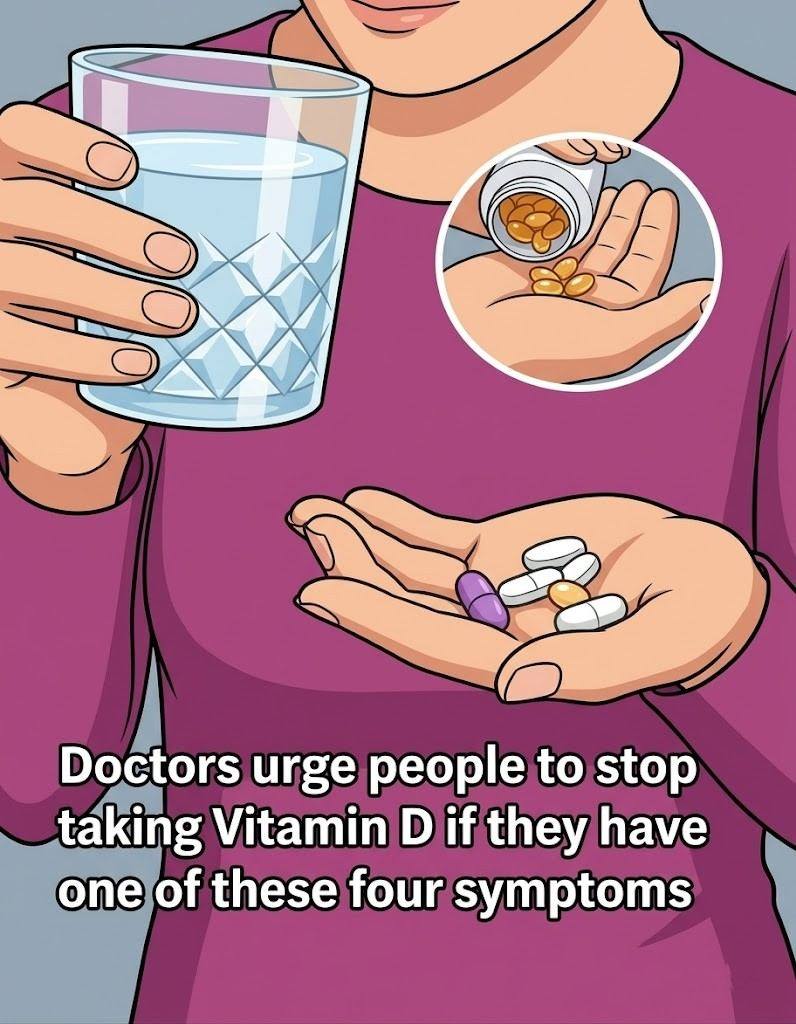
That headline is designed to scare. **Vitamin D is generally safe when taken in appropriate doses. Doctors don’t tell people to “stop immediately” unless there are signs of excess (toxicity)—which usually happens from very high-dose supplements over time, not normal use or sunlight.
⚠️ When Vitamin D can become a problem
Too much vitamin D can raise calcium levels in the blood, a condition called Hypercalcemia. That’s what causes the concerning symptoms.
🚨 4 warning signs that may mean you’re getting too much
1. Persistent nausea, vomiting, or loss of appetite
Your digestive system is often the first to react to high calcium levels.
2. Unusual thirst and frequent urination
High calcium makes your kidneys work harder, leading to dehydration symptoms.
3. Weakness, fatigue, or confusion
These can show up if calcium levels affect your nervous system.
4. Kidney-related pain or issues
Excess vitamin D over time can contribute to kidney strain or even stones.
🧠 Important context (this is what viral posts leave out)
- These symptoms are not specific to vitamin D—they can have many causes
- Toxicity usually occurs at very high doses (e.g., 10,000+ IU daily for long periods)
- Standard doses (like 600–2000 IU/day) are typically safe for most people
❌ Don’t panic-stop without a reason
Stopping vitamin D unnecessarily can be harmful, especially if you’re deficient—linked to bone weakness and other issues.
✅ What to do instead
- Check your dose (many supplements are stronger than you think)
- Get a blood test if you’re concerned
- Talk to a doctor before making major changes
🧾 Bottom line
This isn’t about “4 symptoms = stop immediately.”
It’s about avoiding excessive doses and recognizing rare toxicity signs.
If you tell me how much vitamin D you’re taking daily, I can help you figure out whether it’s in a safe range or not.
