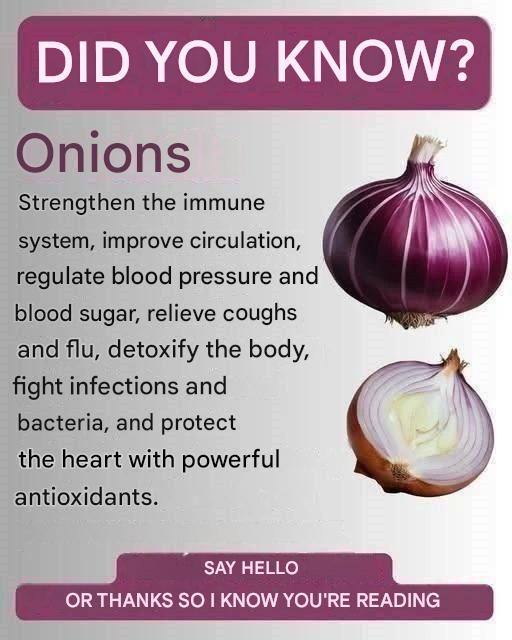
Onion are more than just a cooking ingredient—they contain fiber, antioxidants, and sulfur compounds that may support health in several ways. But they’re not a “cure-all,” just a nutritious food.
Here are the real, evidence-based benefits:
🧠 1. Rich in antioxidants
Onions contain compounds like quercetin, which may help:
- Reduce oxidative stress in the body
- Support overall cellular health
❤️ 2. May support heart health
Regular intake may help:
- Support healthy blood pressure
- Improve cholesterol balance in some people
- Promote better blood vessel function
(Effects are mild and part of an overall healthy diet.)
🩸 3. Blood sugar support
Some studies suggest onions may slightly help regulate blood sugar due to natural plant compounds, but they are not a treatment for diabetes.
🦴 4. Bone support (possible benefit)
Onions may support bone density indirectly through antioxidant activity, especially in older adults, but evidence is still limited.
🦠 5. Immune system support
They contain vitamin C and sulfur compounds that may help the body’s natural defenses.
🧴 6. Gut health
Onions contain prebiotic fiber (inulin), which feeds beneficial gut bacteria.
⚠️ Possible downsides
- Can cause gas or bloating in sensitive people
- May worsen acid reflux in some individuals
- Strong raw onions may irritate eyes or stomach
🧾 Bottom line
Onions are a healthy, nutrient-rich vegetable that can support heart, gut, and overall health—but they are not a medicine or cure for diseases.
If you want, I can also compare raw vs cooked onions and which one gives more health benefits (the answer might surprise you).
