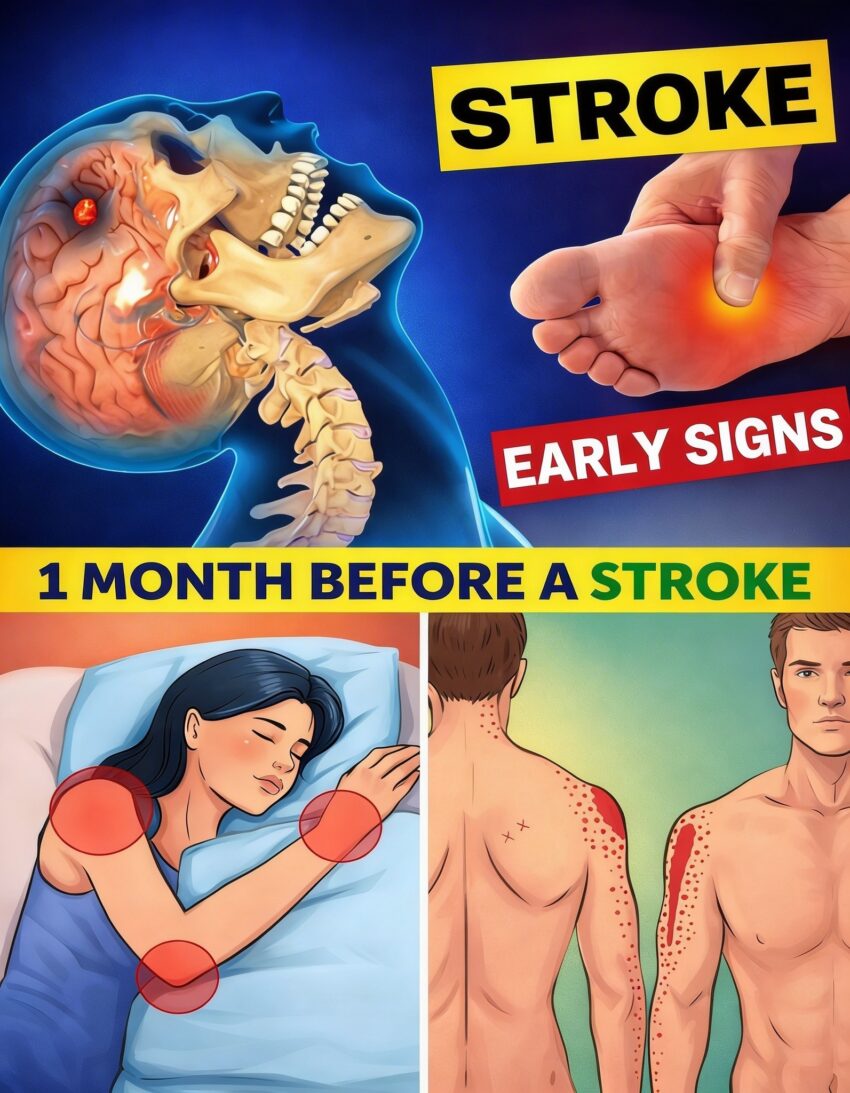
A stroke usually happens suddenly, but in some people there are warning signs days or weeks earlier—especially with a mini-stroke (TIA) or worsening blood vessel disease.
Here are the 8 warning signs that may appear before a stroke, and then 9 practical prevention tips.
⚠️ 8 warning signs that may appear before a stroke
1. Sudden weakness or numbness
- Especially in face, arm, or leg (often one side)
- May come and go (important warning)
2. Brief speech problems
- Slurred speech
- Trouble finding words
- Speaking that suddenly becomes unclear
3. Sudden vision changes
- Blurred vision
- Double vision
- Temporary loss of vision in one eye
4. Repeated dizziness or balance problems
- Feeling unsteady
- Difficulty walking straight
- Sudden coordination issues
5. Severe or unusual headaches
- Sudden “worst headache”
- Especially if different from normal headaches
6. Tingling or “pins and needles”
- In face, arm, or leg
- Especially if one-sided and sudden
7. Confusion or mental fog
- Trouble understanding simple things
- Sudden memory or thinking difficulty
8. Mini-stroke symptoms (TIA)
A transient ischemic attack is a “warning stroke”:
- Symptoms last minutes to hours
- Then disappear completely
- BUT risk of full stroke is high afterward
🧠 Important truth
These signs don’t always appear “one month before” in a predictable way.
Some people get warning episodes, others get no warning at all.
🛡️ 9 proven tips to prevent stroke
1. Control blood pressure (most important)
High BP is the #1 cause of stroke.
2. Manage diabetes
High blood sugar damages blood vessels over time.
3. Reduce salt intake
Too much salt increases blood pressure and stroke risk.
4. Quit smoking
Smoking doubles stroke risk by damaging arteries.
5. Exercise regularly
Even walking 30 minutes daily helps blood flow and heart health.
6. Eat a heart-healthy diet
Focus on:
- Fruits and vegetables
- Whole grains
- Fish, nuts, olive oil
7. Maintain healthy weight
Excess body fat increases BP, diabetes, and cholesterol risk.
8. Limit alcohol (if used)
Heavy alcohol use increases stroke risk significantly.
9. Treat heart conditions early
Especially:
- Atrial fibrillation (irregular heartbeat)
- High cholesterol
🚨 When to seek emergency help
If ANY of these happen suddenly:
- Face drooping
- Arm weakness
- Speech difficulty
Act immediately—don’t wait for it to pass.
Bottom line
Stroke prevention is mostly about protecting your blood vessels over time, not quick fixes. The biggest controllable factors are:
- Blood pressure
- Diabetes
- Smoking
- Lifestyle habits
If you want, I can also give you a simple “FAST test” explanation + emergency checklist so you can recognize stroke in seconds.
