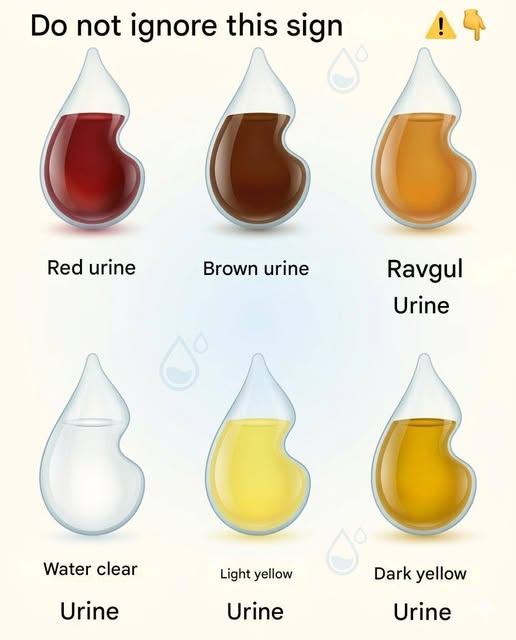
Urine color is one of the simplest “at-home signals” your body gives about hydration and sometimes overall health. It’s not a diagnosis by itself, but it can offer useful clues.
Here’s what different colors usually mean:
💧 1. Clear urine
- Very well hydrated
- Sometimes too much water intake
- Usually normal if occasional
🌤️ 2. Light yellow (straw color) — ideal
Urine
- Normal hydration
- Healthy kidney function in most cases
- This is the “best” target color
🌼 3. Dark yellow / amber
- Mild dehydration (most common cause)
- You need more water
- Can happen in hot weather or after sweating
🍯 4. Honey or brownish color
- More severe dehydration
- OR possible liver issues in some cases
- If persistent → needs medical check
🧡 5. Orange urine
Possible causes:
- Dehydration
- Certain medications or vitamins (especially B-complex)
- Rarely liver or bile duct issues if persistent
🌸 6. Pink or red urine
- Can be harmless (beets, berries, food dyes)
- OR may indicate blood in urine
🚩 If not from food → needs urgent check
💚 7. Green or blue urine (rare)
- Usually from medications or dyes
- Rare infections or metabolic causes
⚪ 8. Cloudy urine
- May indicate:
- Urinary tract infection (UTI)
- High phosphate levels
- Dehydration
⚠️ When to be concerned
See a doctor if you notice:
- Blood (red/pink) without food cause
- Persistent dark brown urine
- Burning, pain, or fever with urination
- Sudden change lasting more than a few days
🧠 Simple rule to remember
Pale yellow = healthy hydration balance
💡 Important truth
Urine color mainly reflects:
- Hydration level (most important)
- Diet
- Vitamins/medications
- Sometimes medical conditions
If you want, I can give you a quick “kidney and hydration health checklist” based on urine, thirst, and energy levels to help you monitor your health at home.
