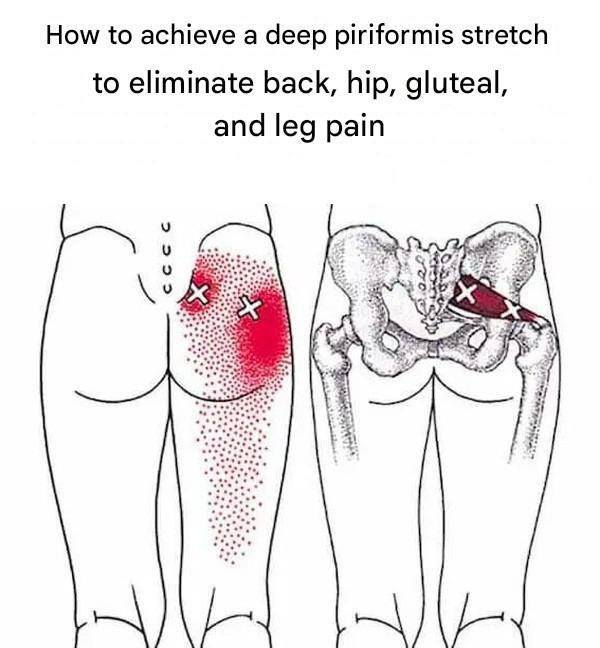
Piriformis syndrome can cause pain in the buttock, hip, and sometimes down the leg (sciatica-like pain). Targeted stretching helps reduce tension on the nerve—but technique matters.
Here are safe, effective piriformis stretches you can use:
🧘 1. Figure-4 stretch (most effective)
Piriformis stretch
How to do it:
- Lie on your back
- Cross one ankle over the opposite knee
- Pull the lower leg toward your chest
Hold: 20–30 seconds, 2–3 times each side
Feel: deep stretch in the buttock
🪑 2. Seated stretch (easy version)
How:
- Sit on a chair
- Place ankle over opposite knee
- Lean forward slowly with a straight back
Best for: office or older adults
🧍 3. Standing stretch
How:
- Cross one leg over the other
- Slightly bend and lean forward
- Use a wall for balance
🛏️ 4. Knee-to-opposite-shoulder stretch
How:
- Lie on your back
- Pull one knee toward the opposite shoulder
Good for: deeper targeting of the piriformis
🎾 5. Trigger point release (advanced)
- Sit on a tennis or massage ball
- Roll slowly over the painful area
- Pause on tight spots for 20–30 seconds
⚠️ Important safety tips
- Stretch gently—no sharp pain
- Breathe slowly (don’t hold breath)
- Stop if pain shoots down the leg
- Do both sides, even if one hurts
🧠 Why this works
The piriformis muscle sits close to the sciatic nerve. When tight, it can compress the nerve and cause:
- buttock pain
- tingling or numbness
- leg discomfort
Stretching reduces pressure and improves mobility.
🚨 When to seek help
- Pain lasts more than 2–3 weeks
- Numbness or weakness in the leg
- Severe or worsening symptoms
🧾 Bottom line
Consistent, gentle stretching + less prolonged sitting = the best relief for piriformis-related pain.
If you want, I can build you a 5–10 minute daily routine specifically for sciatica and hip pain relief.
