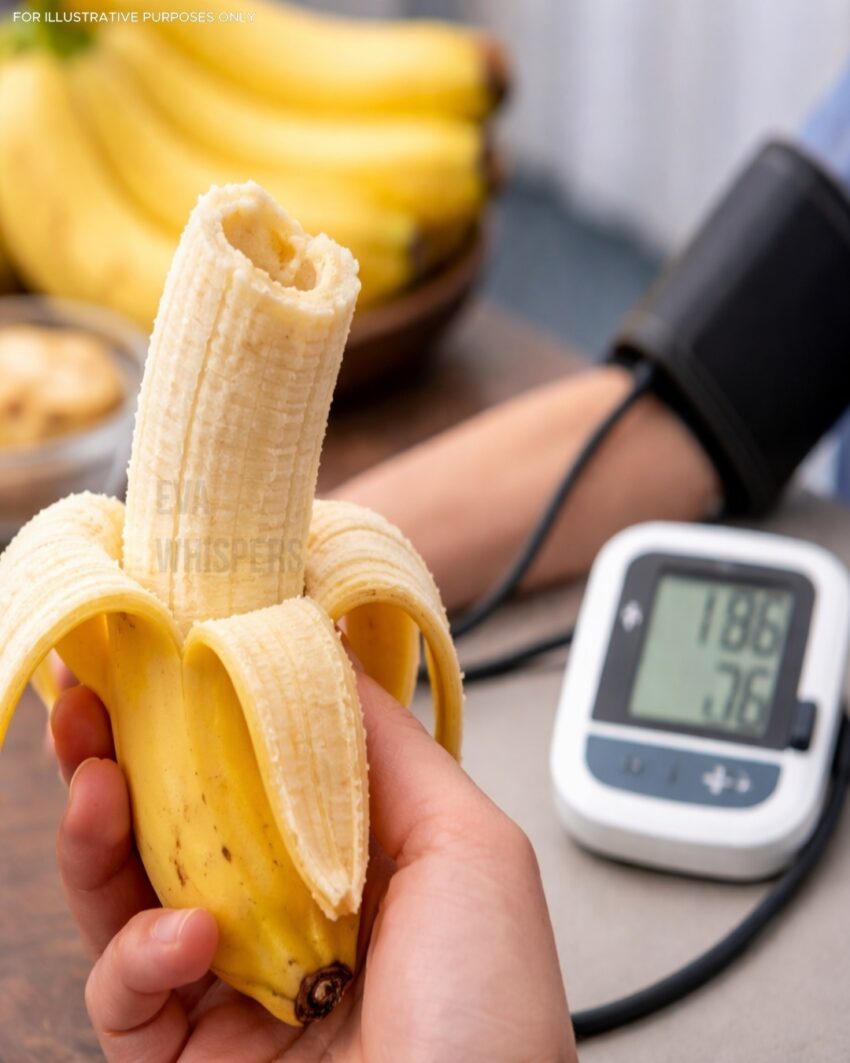
Ah, bananas and blood pressure—this is a classic “food-heart health” topic! Let’s break it down carefully and clearly.
Why Bananas Can Affect Blood Pressure
- High Potassium Content
- A medium banana has about 400–450 mg of potassium.
- Potassium helps balance sodium levels in your body, which in turn helps relax blood vessel walls and reduce pressure on arterial walls.
- Supports Heart Function
- By helping nerves and muscles function properly, potassium contributes to a healthy heartbeat, which is important for maintaining normal blood pressure.
- Low in Sodium
- Sodium is the nutrient that raises blood pressure if consumed in excess. Bananas have almost no sodium, which is beneficial.
Effects of Eating a Banana Every Day
- Mild to Moderate Blood Pressure Reduction
- Studies suggest that regular potassium intake can lower systolic blood pressure by about 4–5 mmHg in people with hypertension.
- Better Heart and Kidney Health
- Potassium supports kidney function, helping the body flush out excess sodium.
- Overall Nutritional Benefits
- Bananas also provide fiber, vitamin C, vitamin B6, and antioxidants, which contribute to general cardiovascular health.
Important Notes
- Potassium Overload is Rare but Possible
- People with kidney disease or on certain medications (like potassium-sparing diuretics) should monitor potassium intake, as too much can be dangerous.
- Diet Matters
- One banana a day helps, but overall diet—low in salt, rich in fruits, vegetables, and whole grains—is more important for blood pressure control.
💡 Bottom Line:
Eating one banana a day can help lower blood pressure slightly, especially if your diet is balanced and you’re not exceeding sodium limits. It’s a simple, tasty, and natural way to support heart health.
If you want, I can make a “Top 10 Foods That Naturally Lower Blood Pressure” list—easy to eat daily and backed by science.
Do you want me to make that list?
